Better Food Toronto
An unconventional architectural thesis mapping Toronto's hidden food supply chain through field journalism, covert data collection, and physical interventions. Awarded the Faculty Design Prize.
Problem
Complex, undocumented supply network lacking transparency and favoring mega-industrial hubs over local resilience.
Methodology
Covert physical site access via alias firm registration, 3D digital reconstruction, and stakeholder interviews.
Output
Three-scale panoramic system mapping and directly deployable hardware prototypes designed collaboratively.
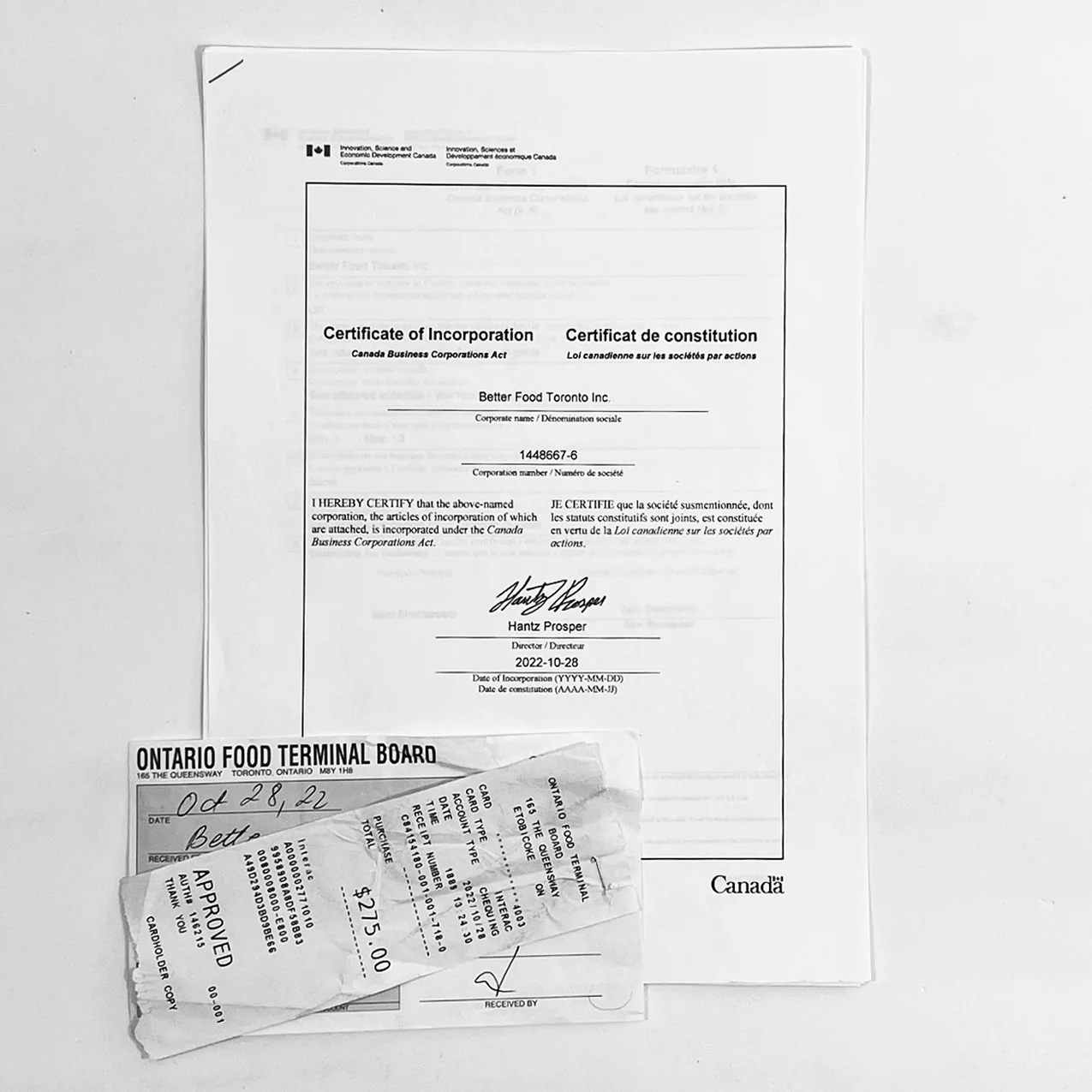
Five Stories About and Around the Ontario Food Terminal
Hi Everyone, my name is Sam. And my project is called Better Food Toronto, five stories about and around the Ontario Food Terminal.
The Tomato Story
Cataloging the food supply chain from production to consumption
Chapter One marked the beginning of the semester.
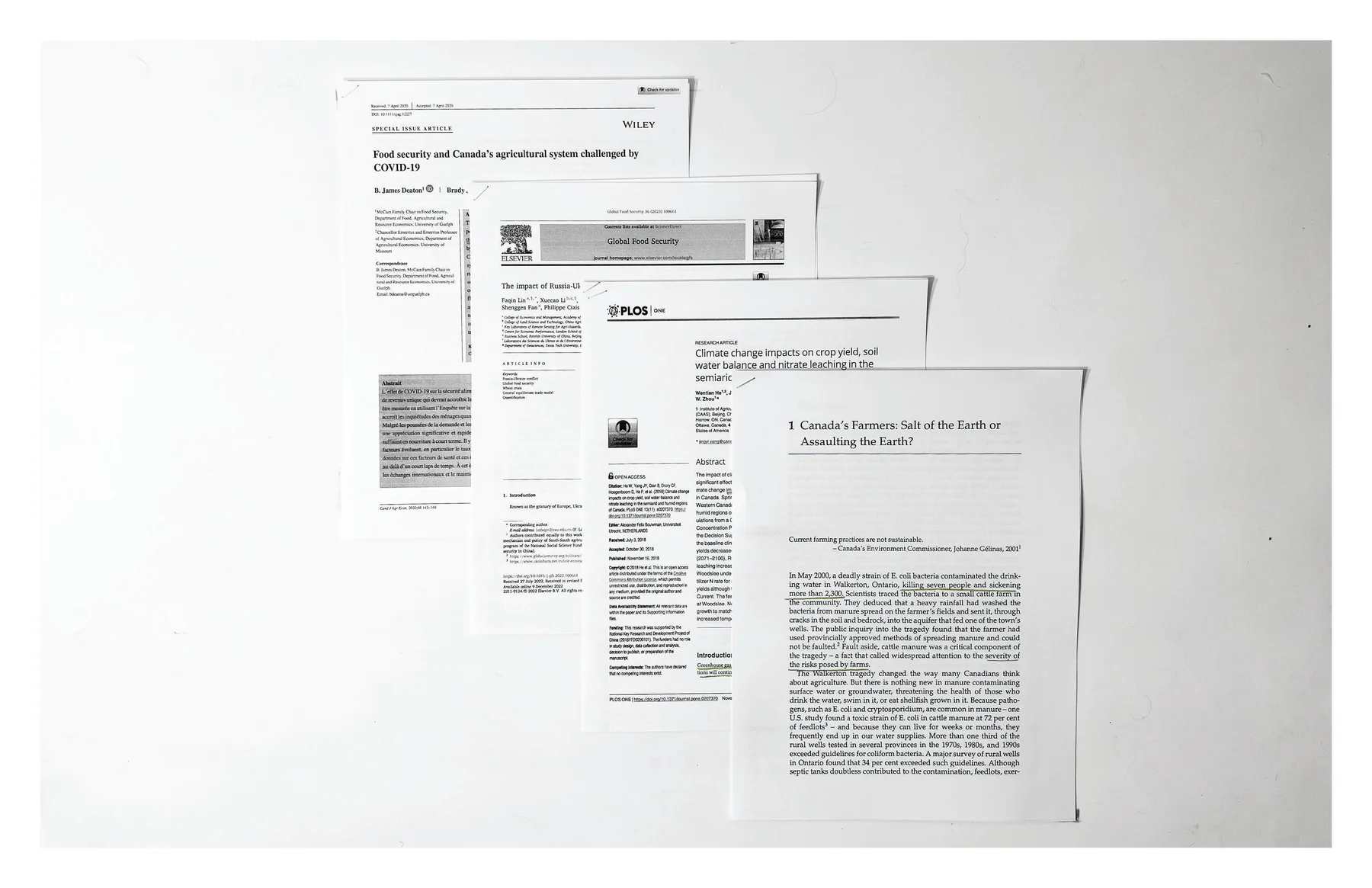
The project began by questioning the resilience of our regional food system in the face of external supply chain challenges—specifically the COVID-19 pandemic, geopolitical conflict, and climate change.
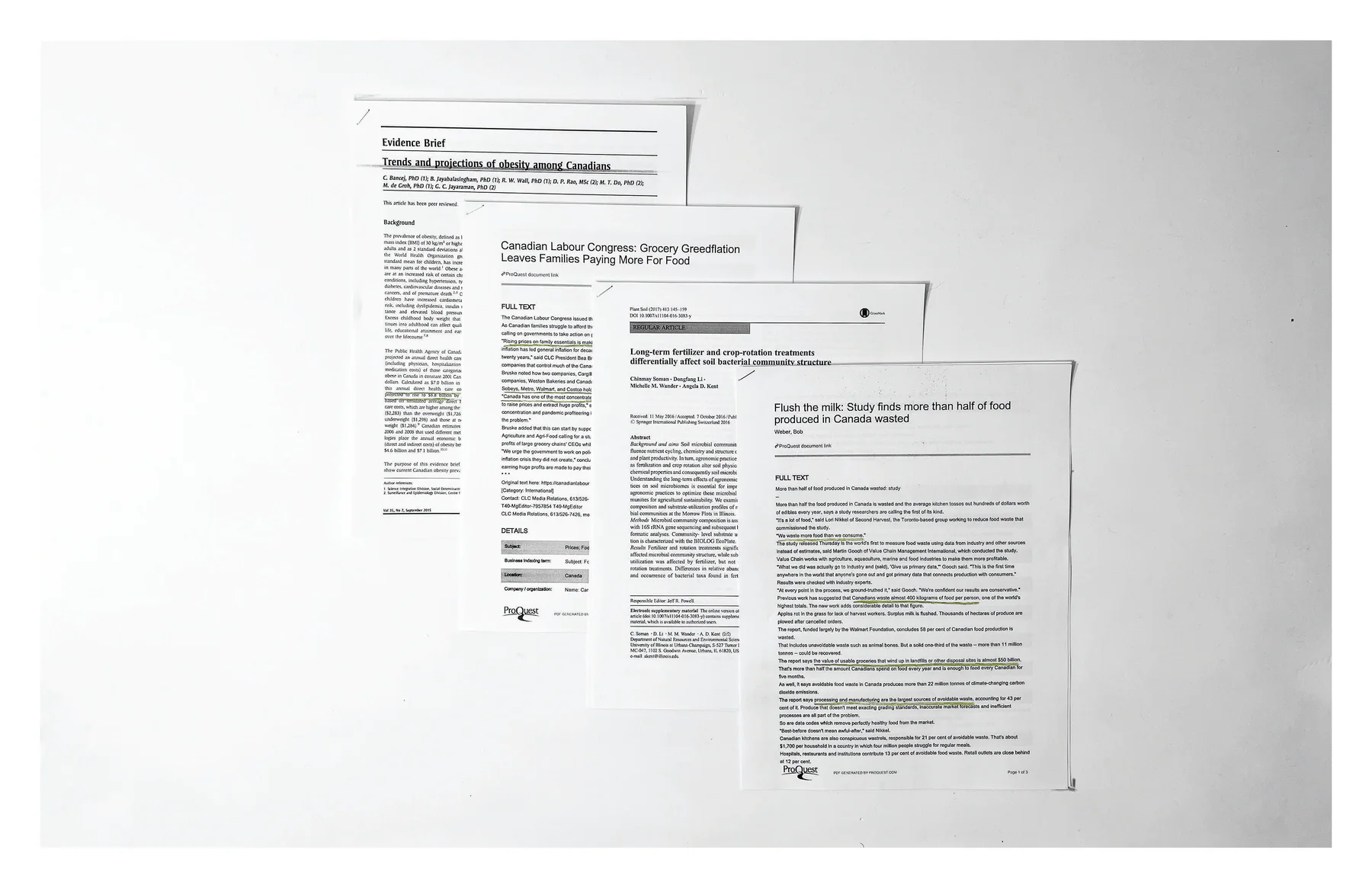
And internal challenges such as bad consumption habits, corporate greed, lack of transparency, waste production, and unsustainable farming practices.
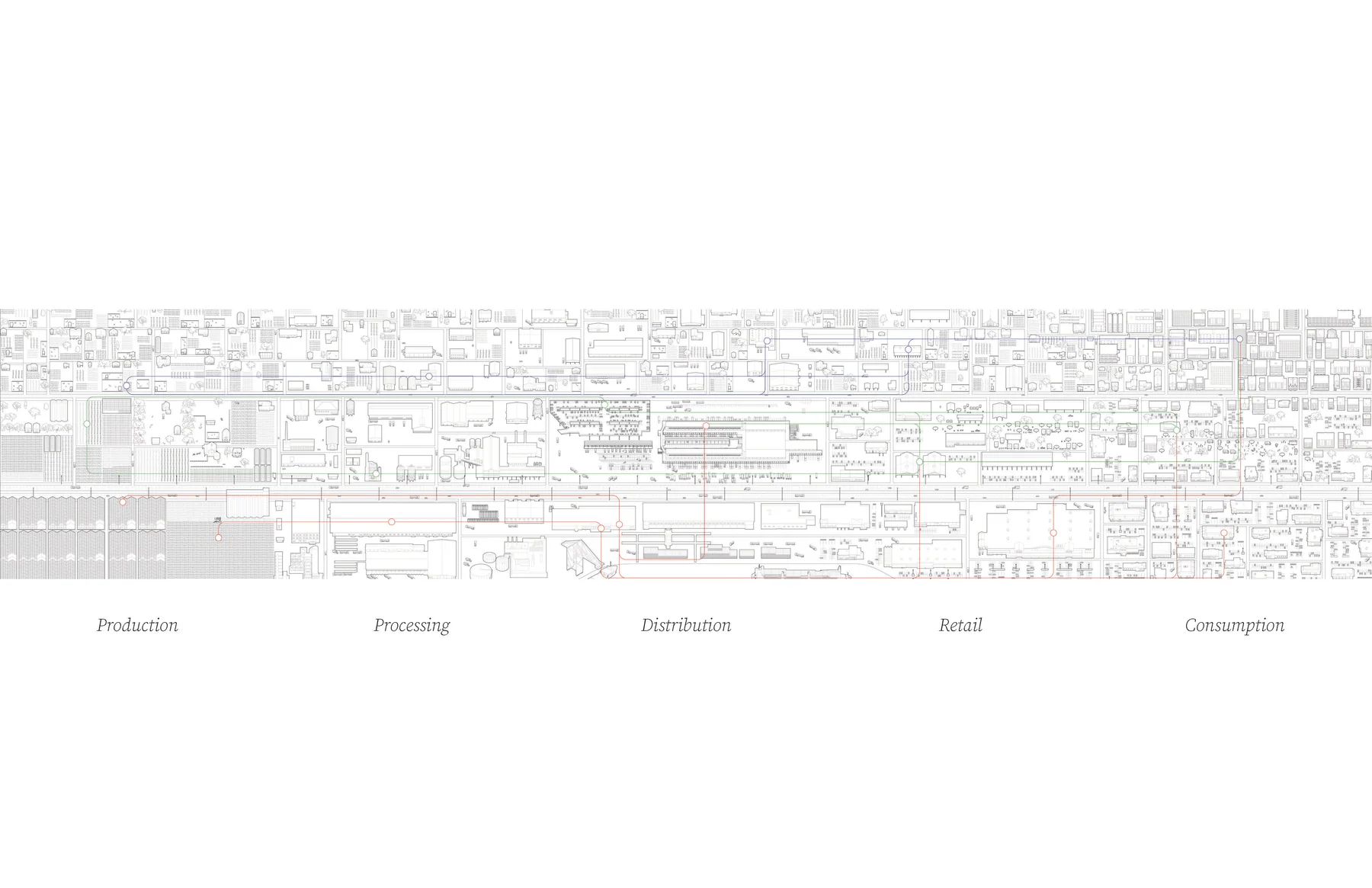
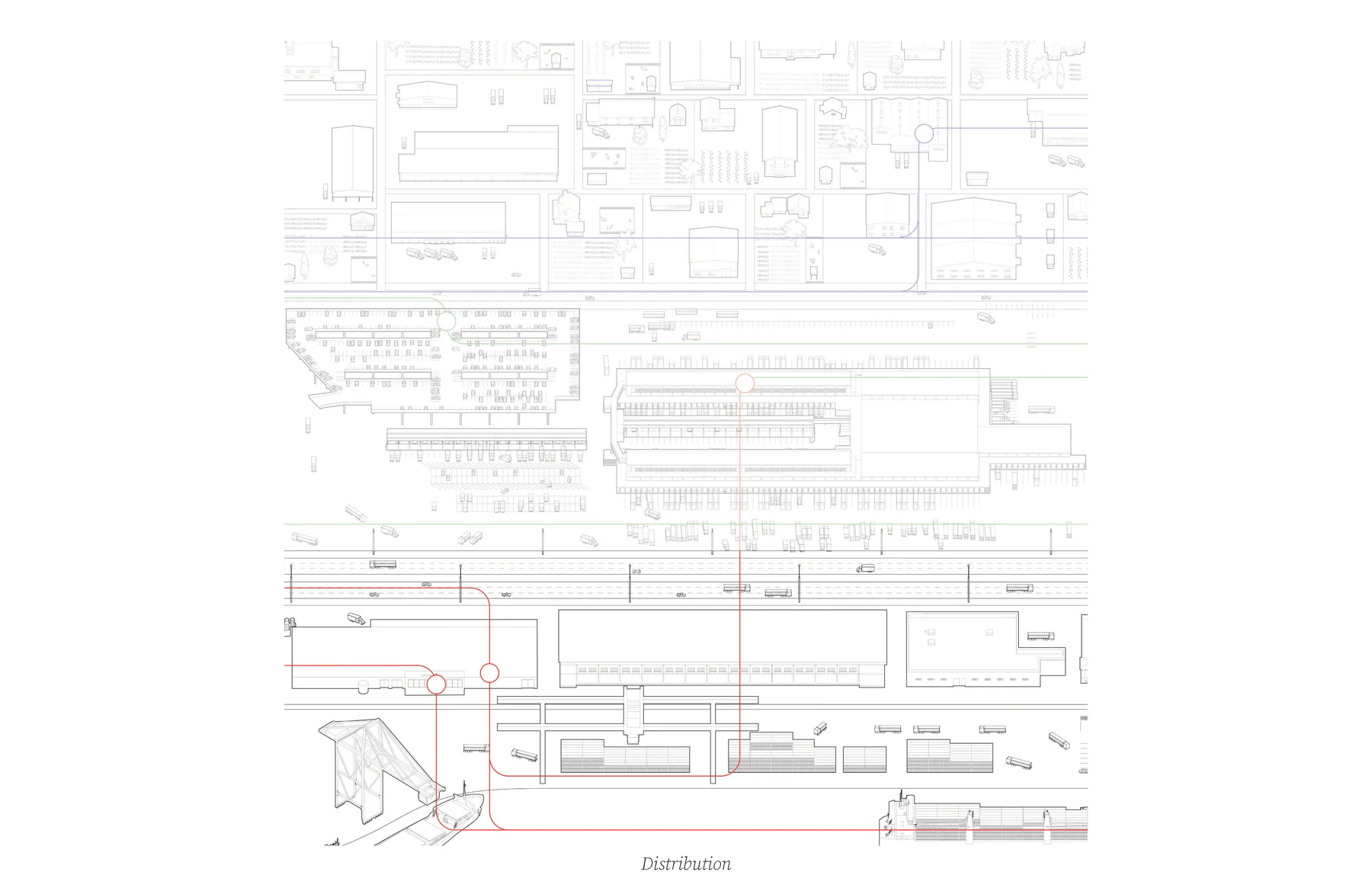
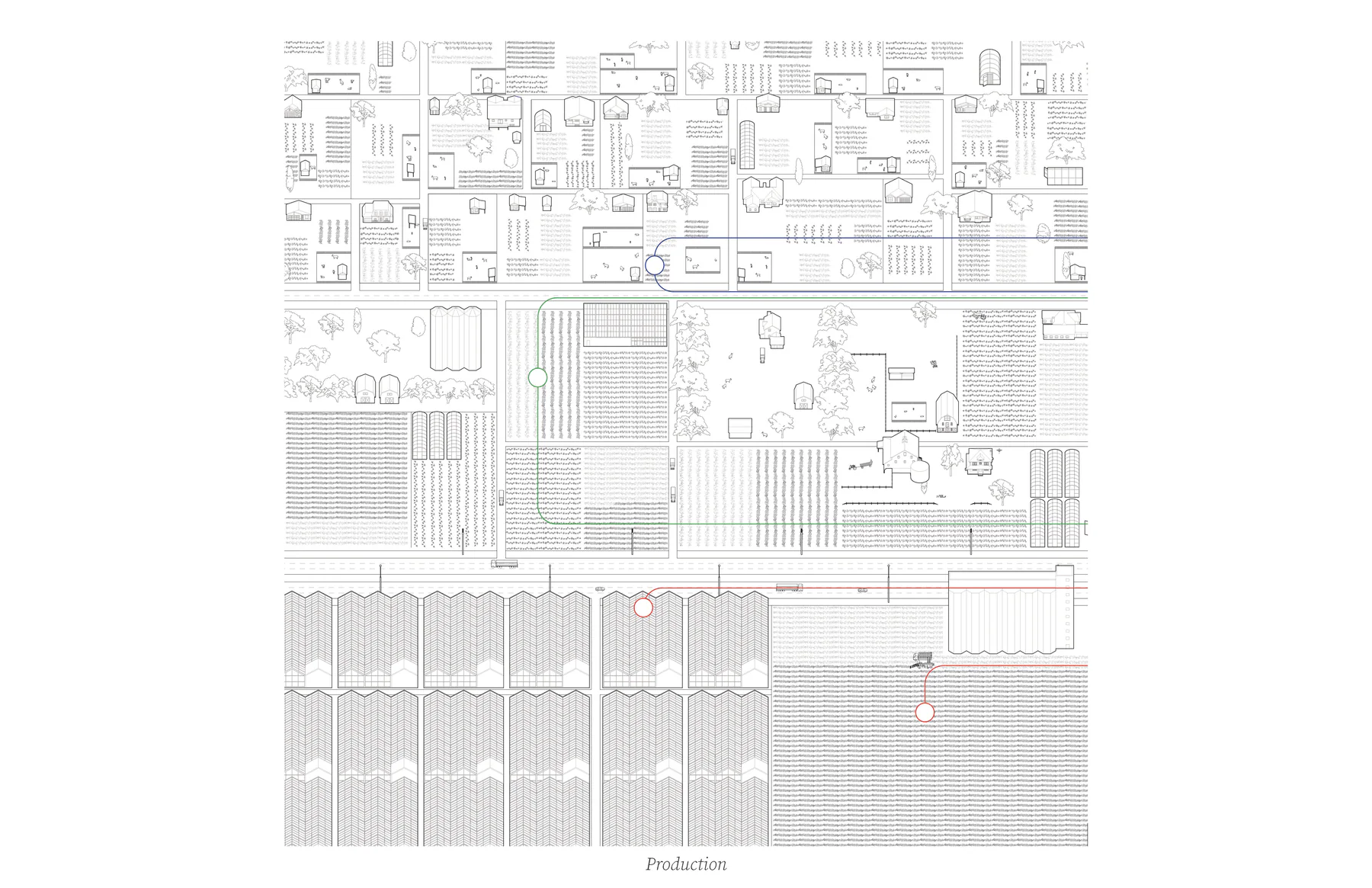
To begin the investigation, I narrowed my focus to a single food item: Tomatoes. I began cataloging the common architectural infrastructures that tomatoes experience from production all the way to consumption—resulting in the comprehensive cartographic drawing below.
The catalog is divided into 5 chronological stages and maps three distinct operational scales: the large-scale multi-national infrastructure at the bottom, the medium-scale regional infrastructure in the middle, and the small-scale local infrastructure at the top.
What became immediately evident while mapping this catalog was that our local food system is overwhelmingly dominated by large-scale, consolidated industrial infrastructures and big-box architectural entities.
These global infrastructures are highly efficient at moving volume, but they are entirely ineffective at addressing systemic issues related to:
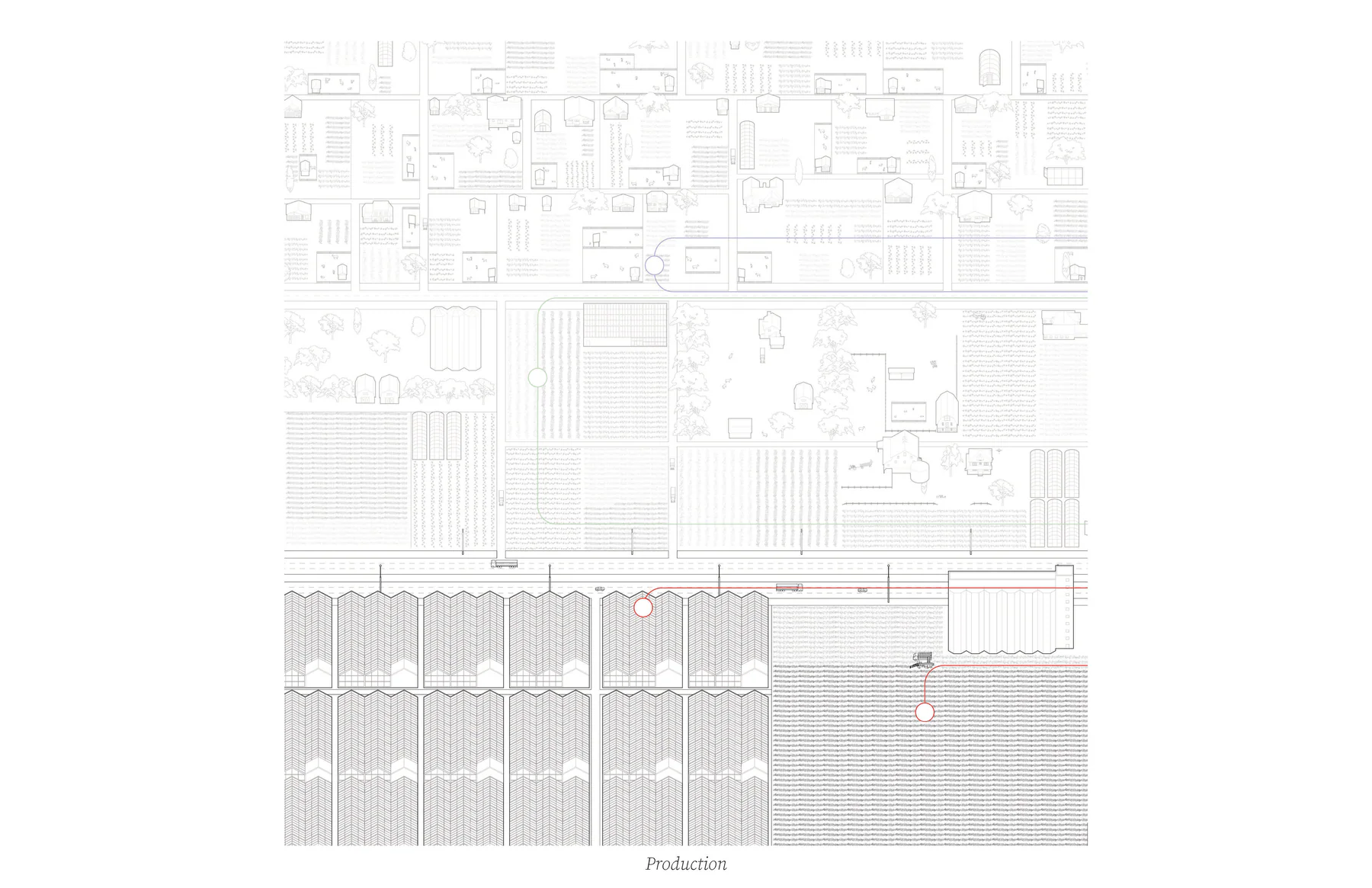
Mono-crop agriculture, and seasonal immigrant workers.
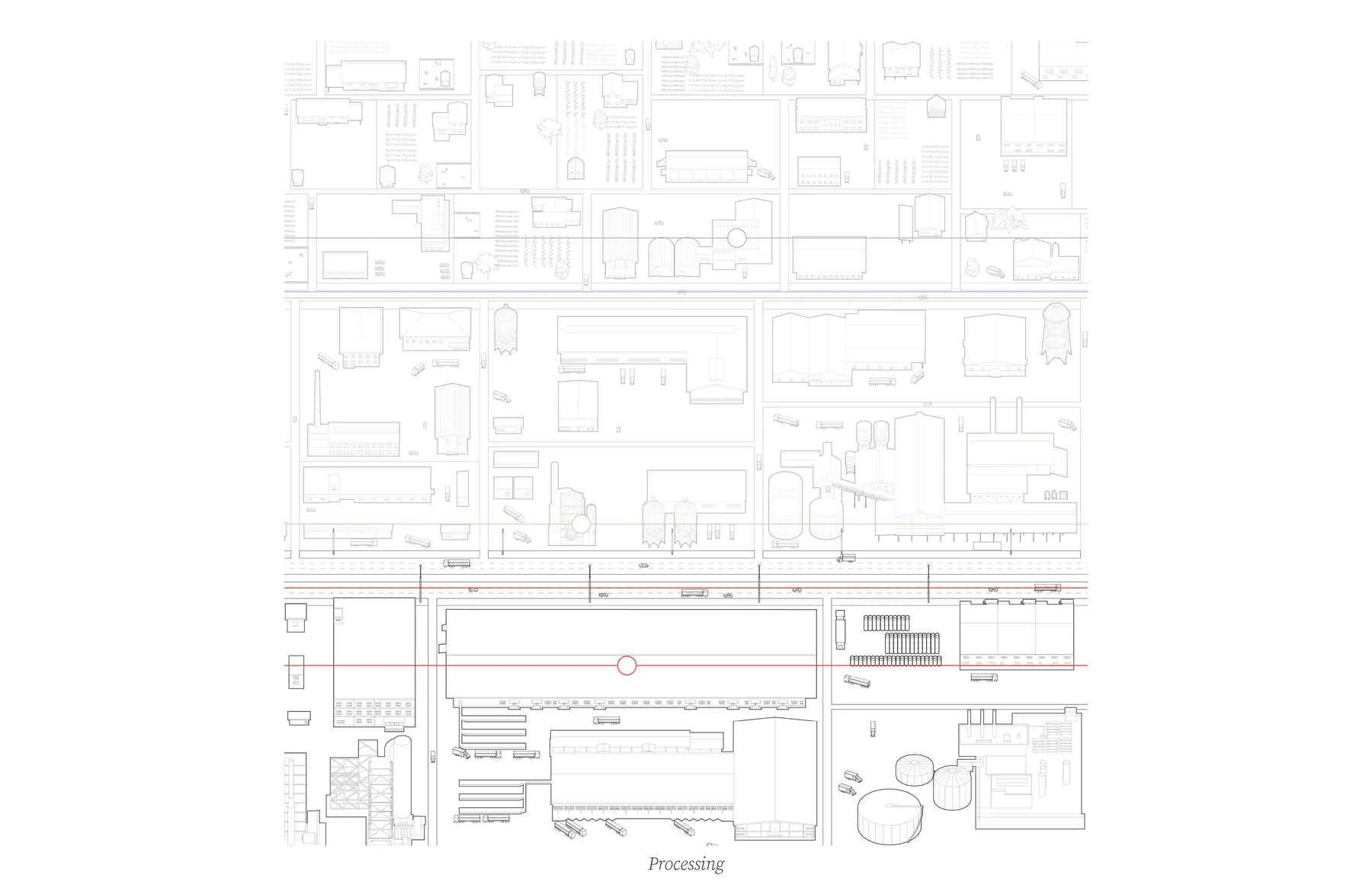
Monopoly and dominance of global food factories.
Fragile and unsustainable global distribution networks.
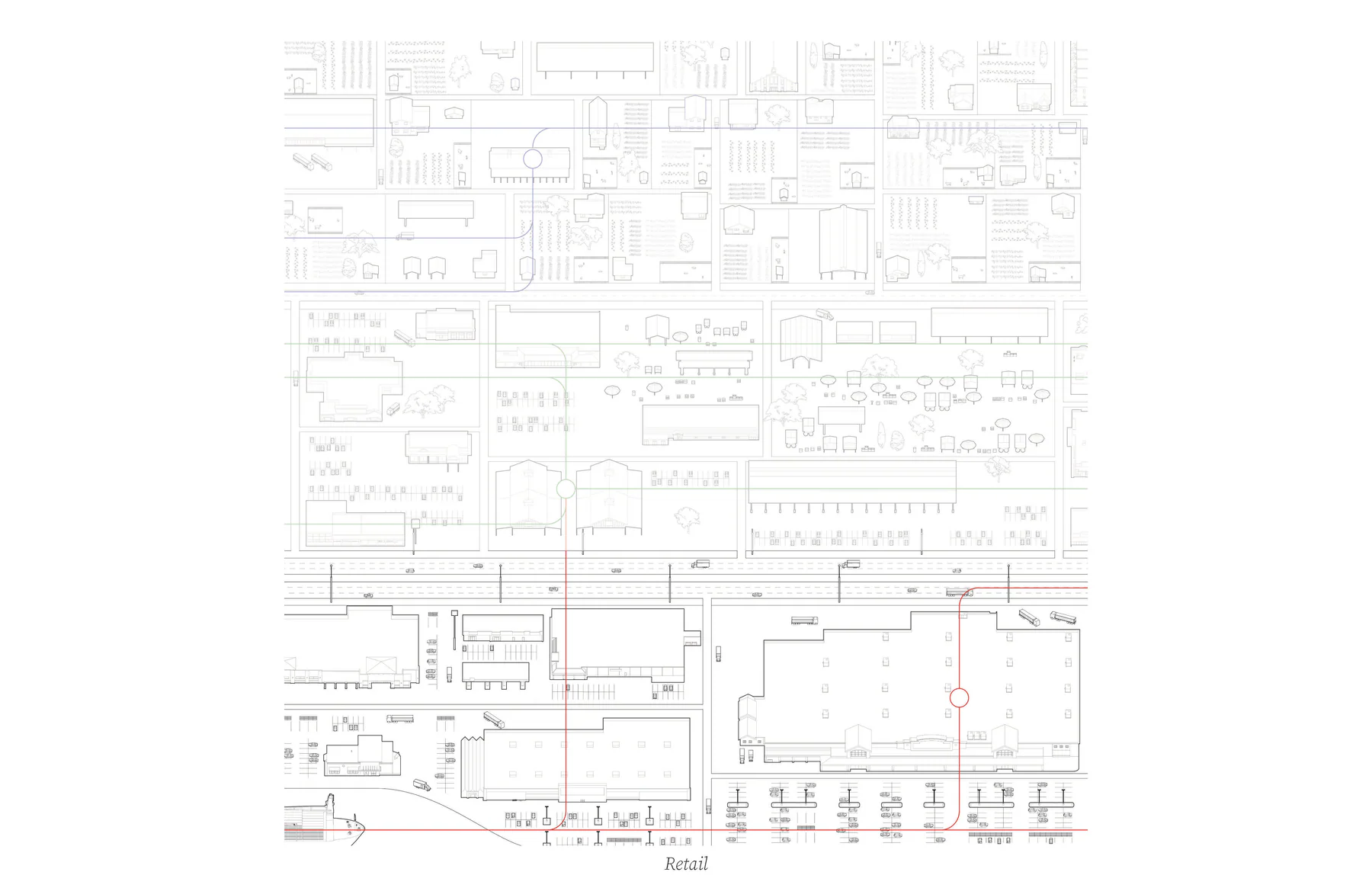
Vertical consolidation of retail stores such as Walmart, Costco, and Loblaws.
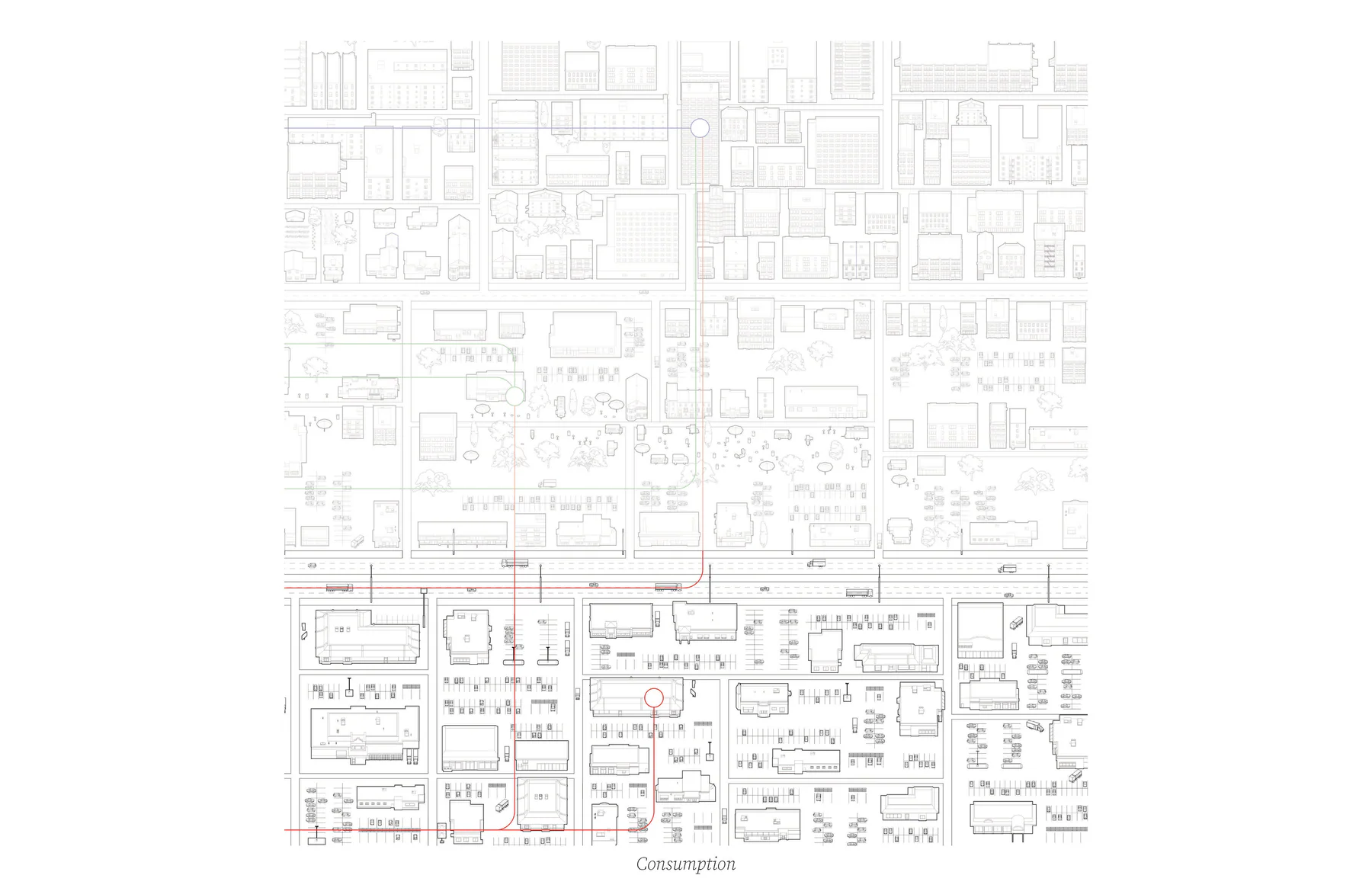
And global fast-food chains that are redefining our relationship with food.
After mapping this industrial monopoly, I turned my attention to the medium and small-scale infrastructures. These localized networks function as a critical antidote to industrial fragility, offering localized advantages such as:
Diverse, family-owned farming practices.
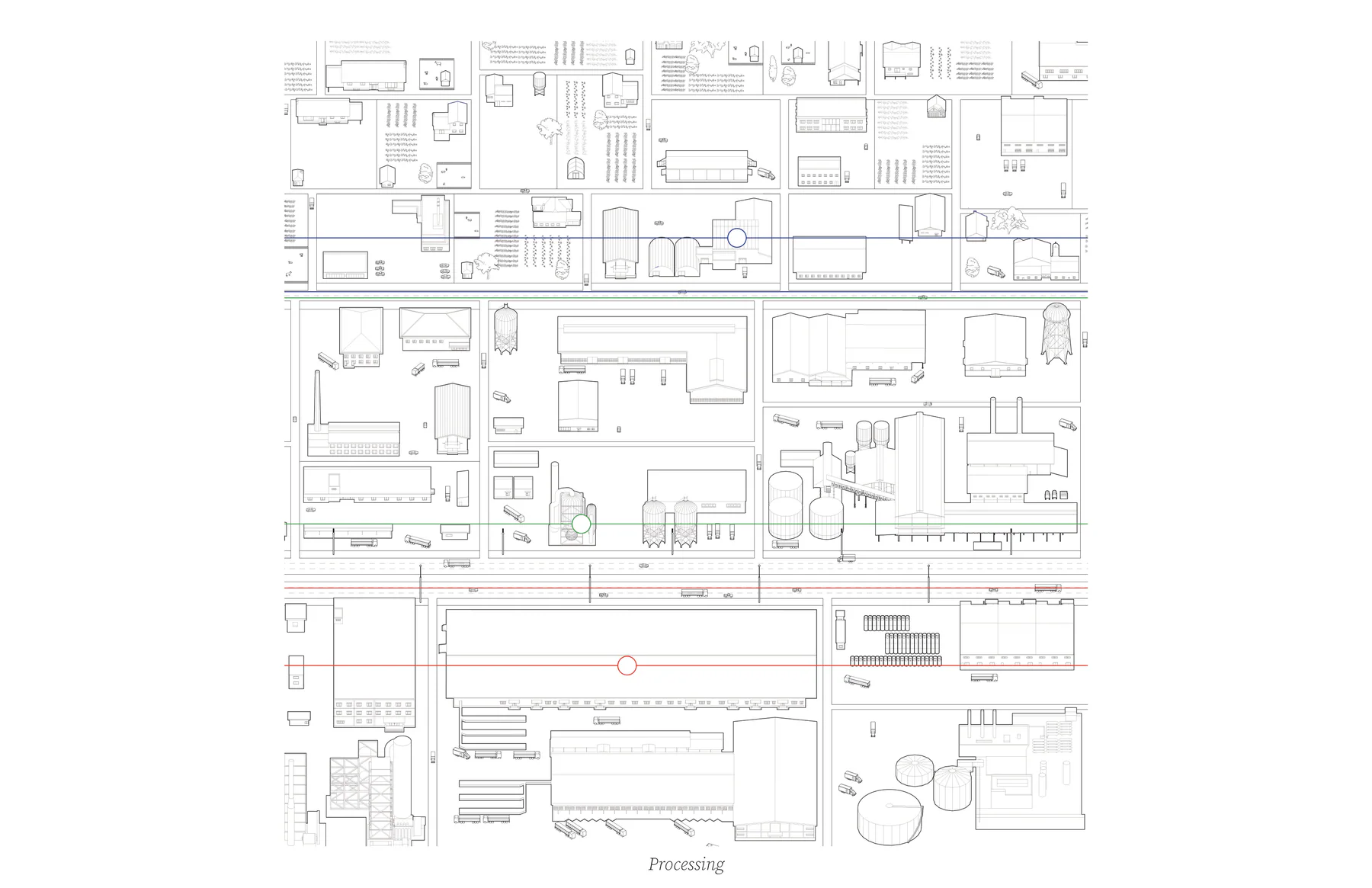
Decentralized and culturally rich food processing plants.
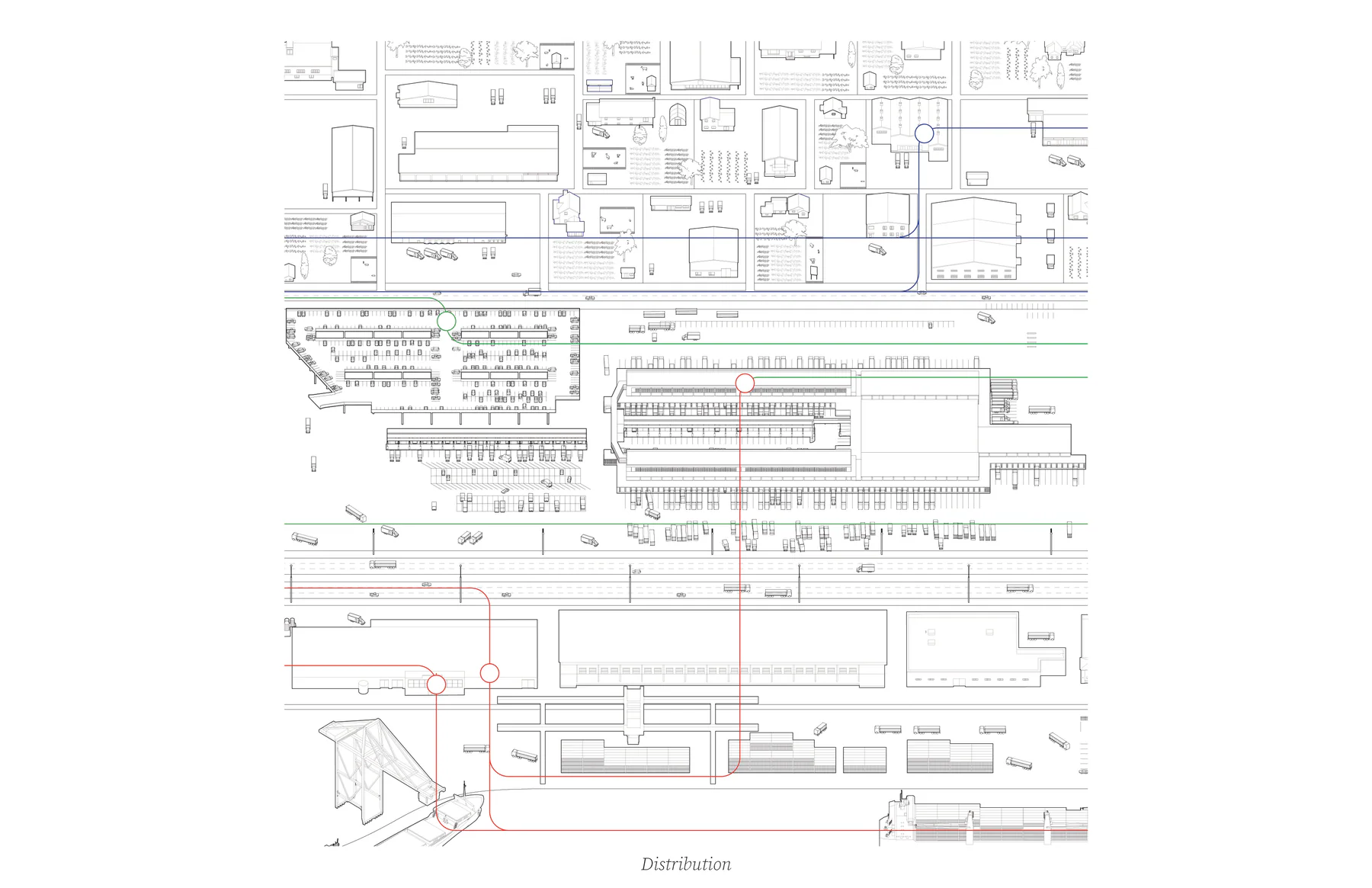
Local and short distribution networks.
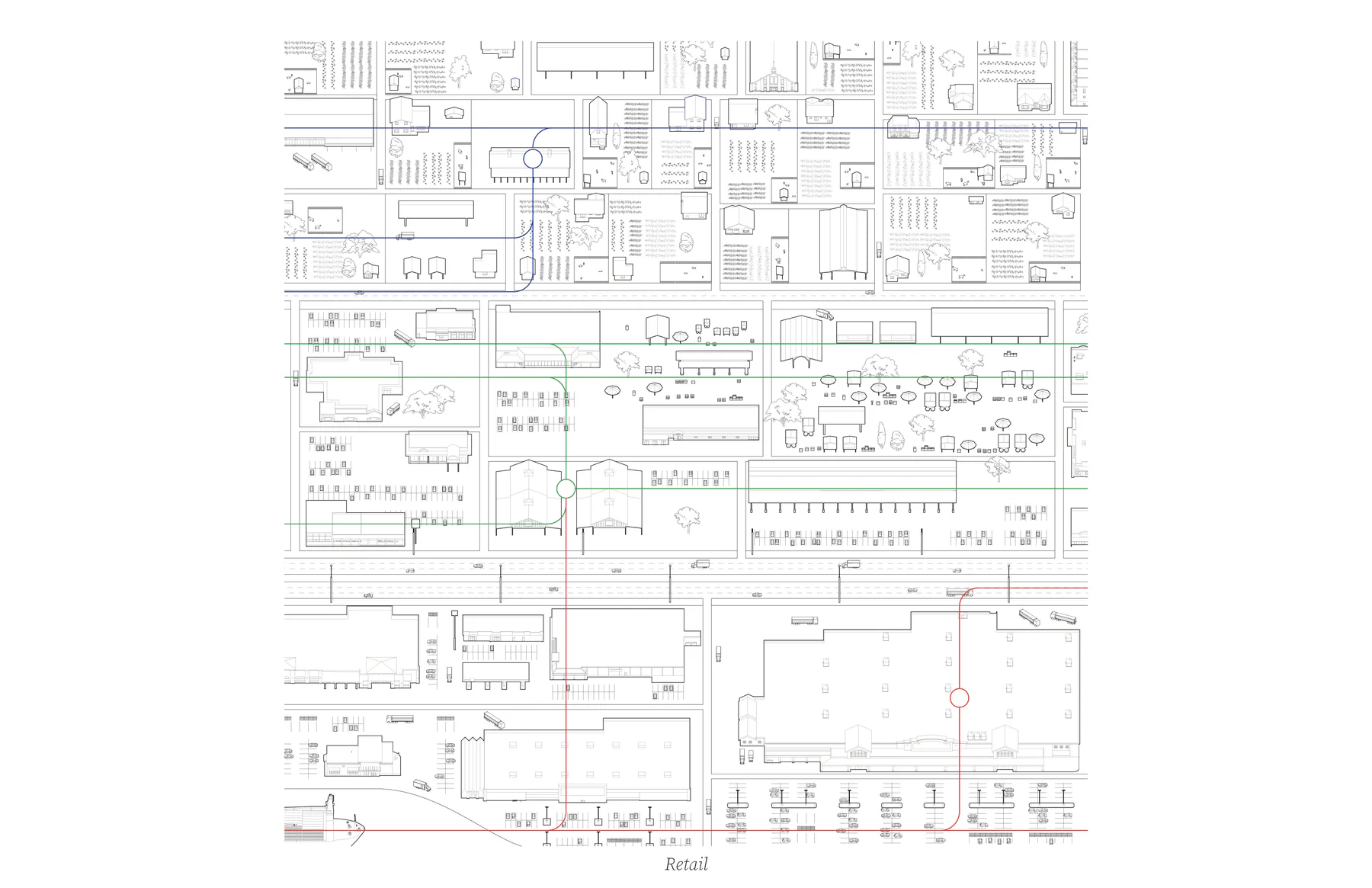
And decentralized independent and family-owned stores.
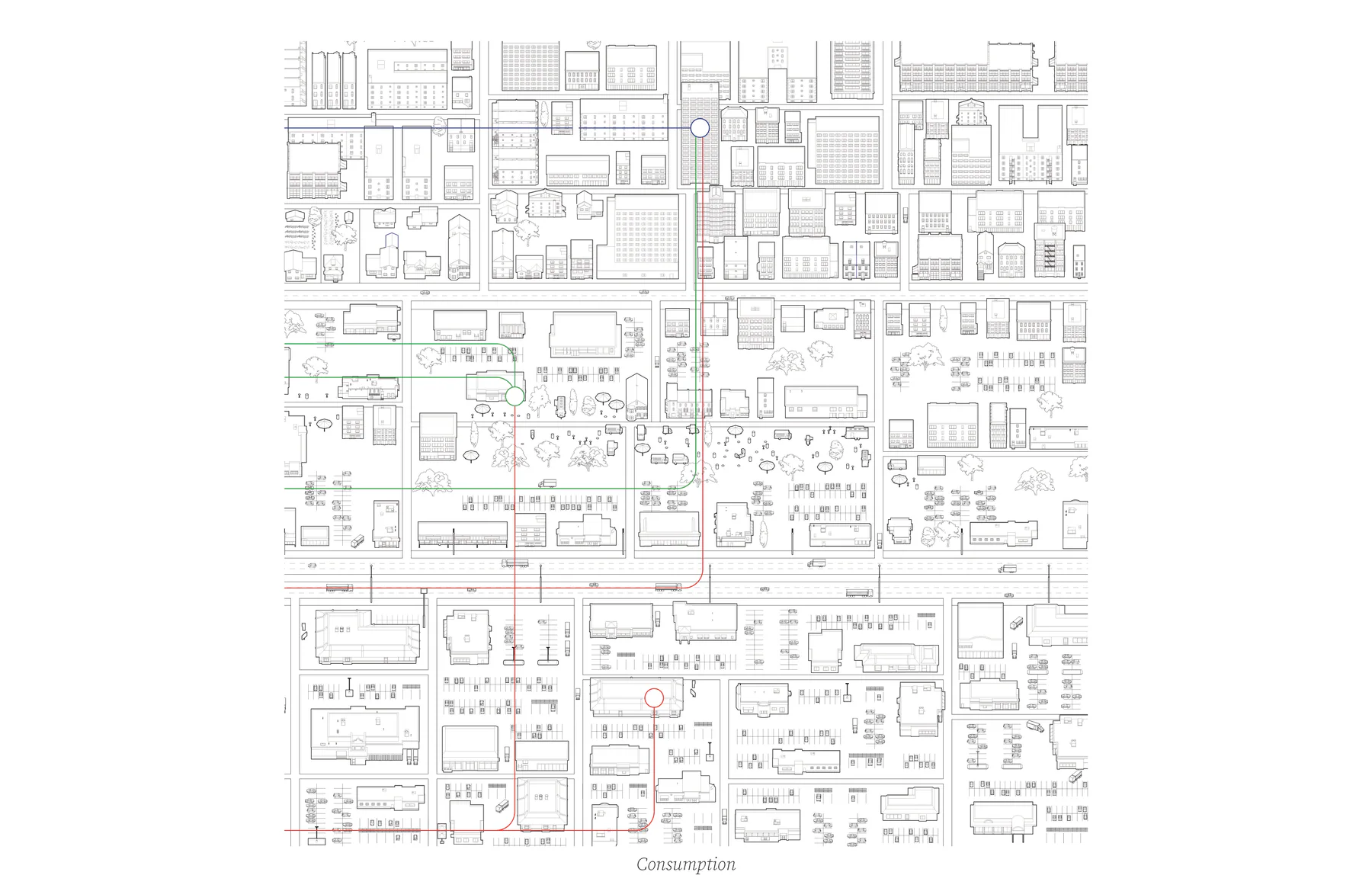
And restaurants.
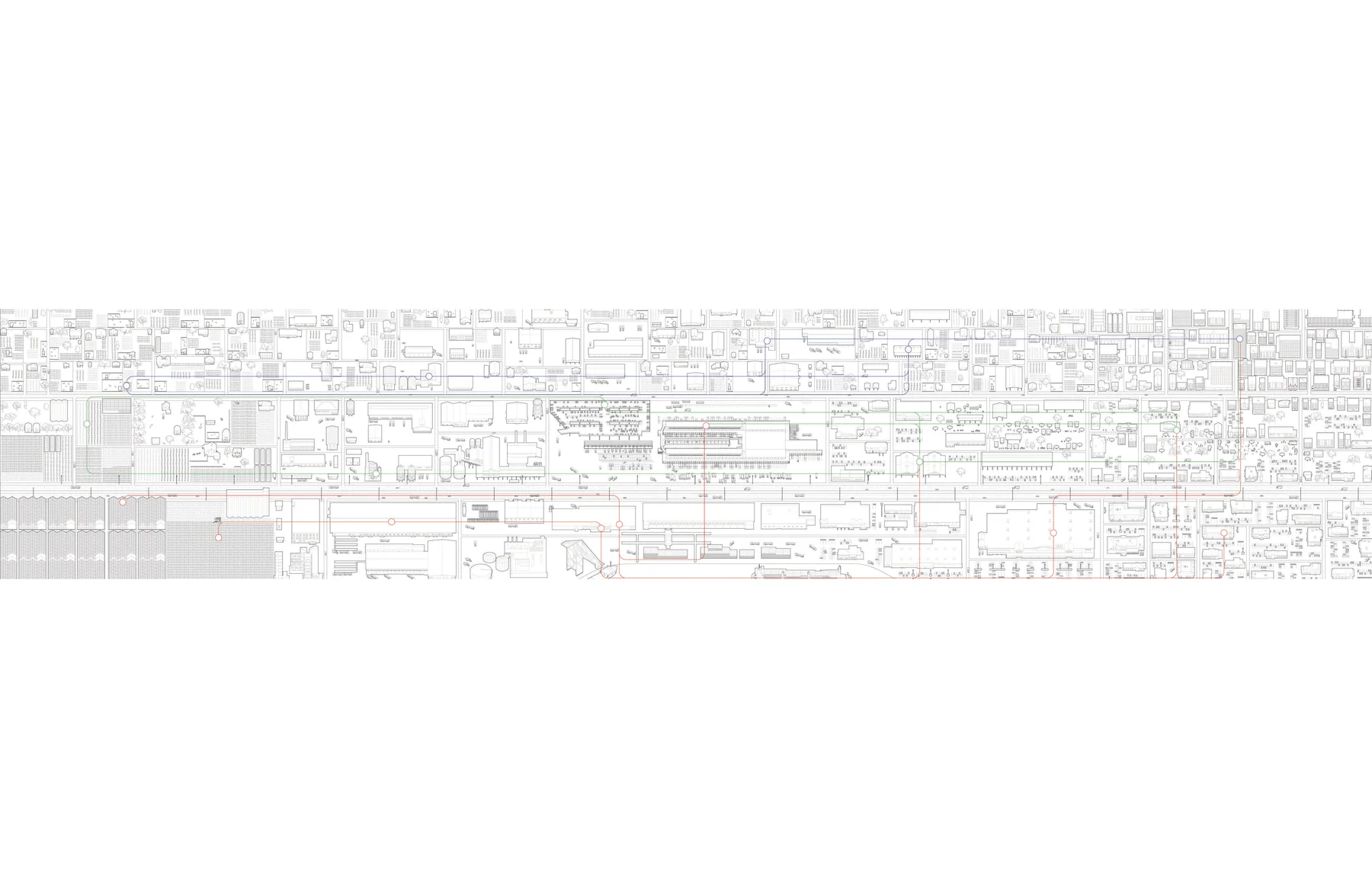
Treating the small and medium-scale entities as the necessary allies for a resilient food network, I shifted my focus to the physical core of this domestic system: The Ontario Food Terminal. Situated functionally in the center of the drawing, the Terminal was continually identified as the single most critical bottleneck for independent food distribution in Toronto.
The Terminal Story
Investigating the Ontario Food Terminal from the inside
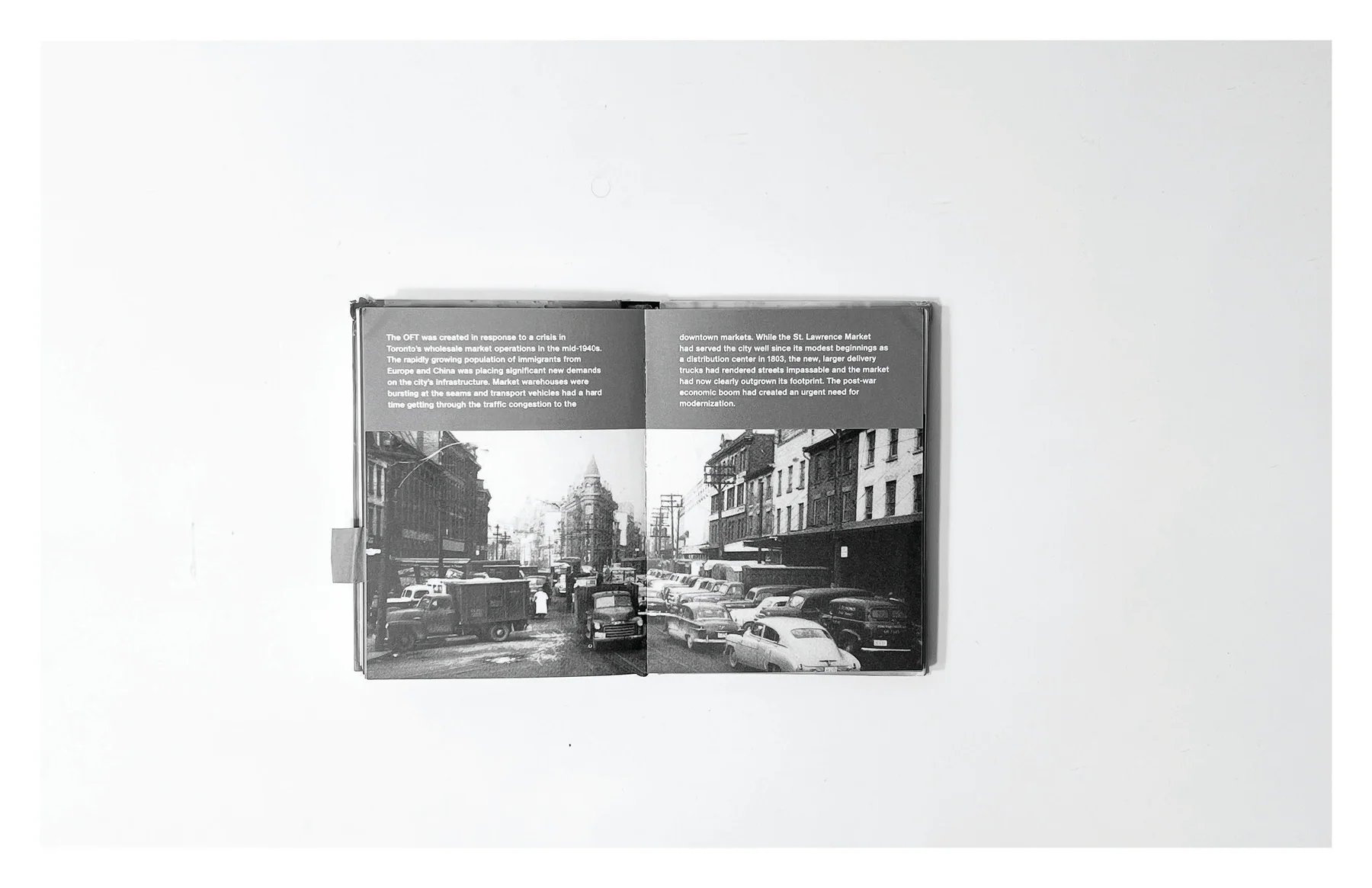
I began researching the Food Terminal. Constructed in the 1940s, it served as a brutalist, industrialized replacement for the historic St. Lawrence Market, which used to function as the primary wholesale hub for the city.
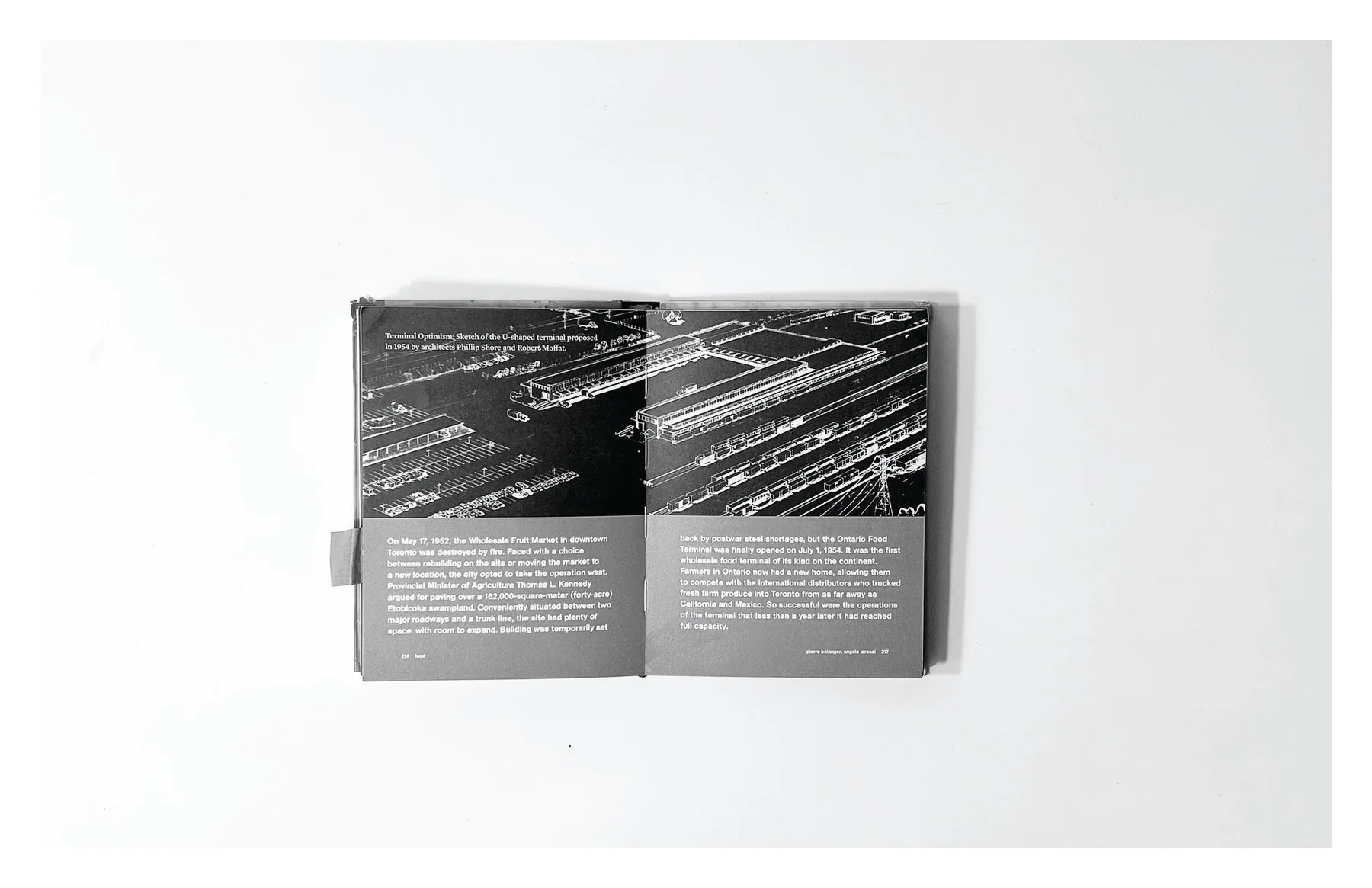
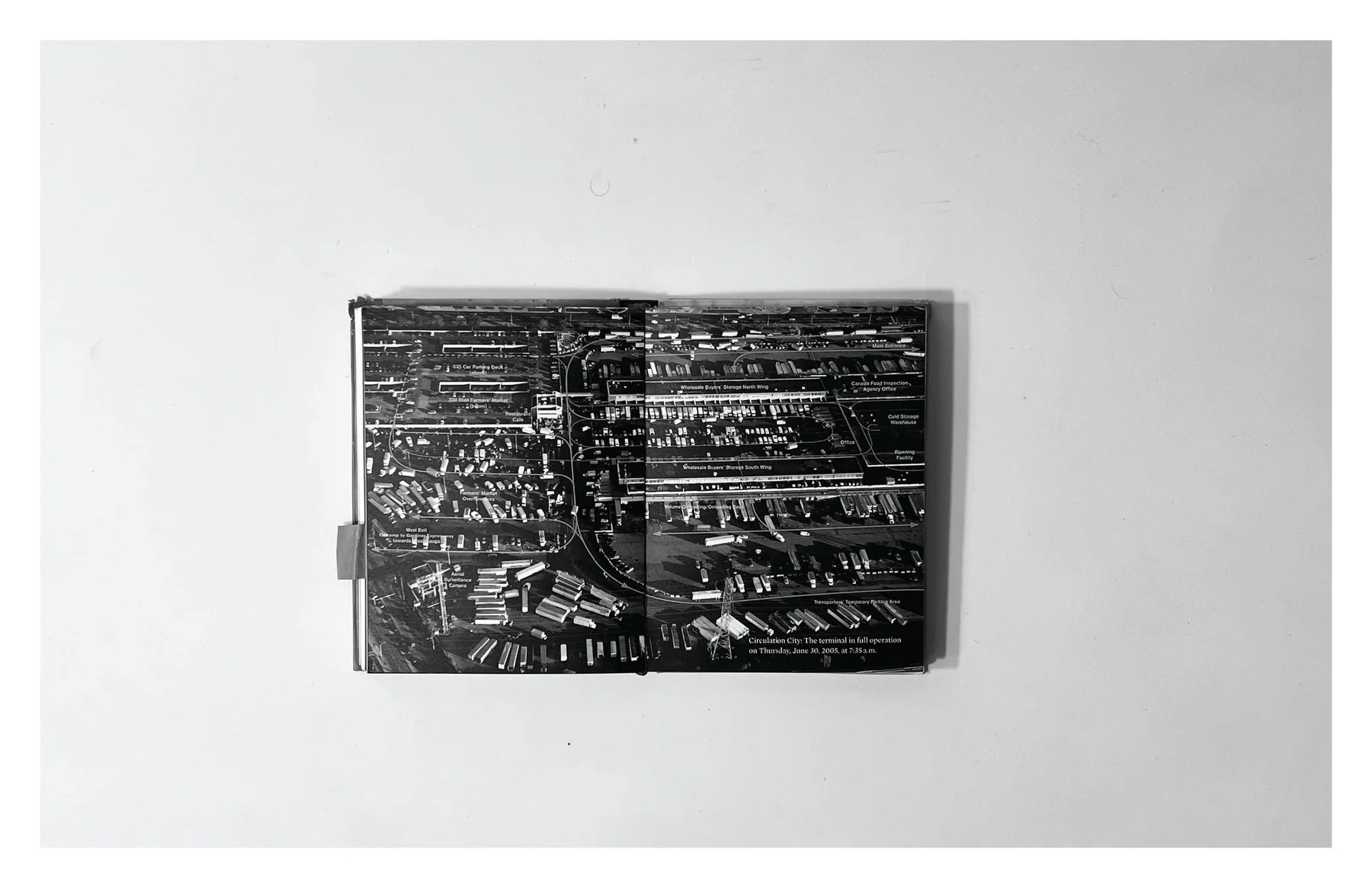
It is 40 acres in size and was designed as a highly efficient and fast-paced network
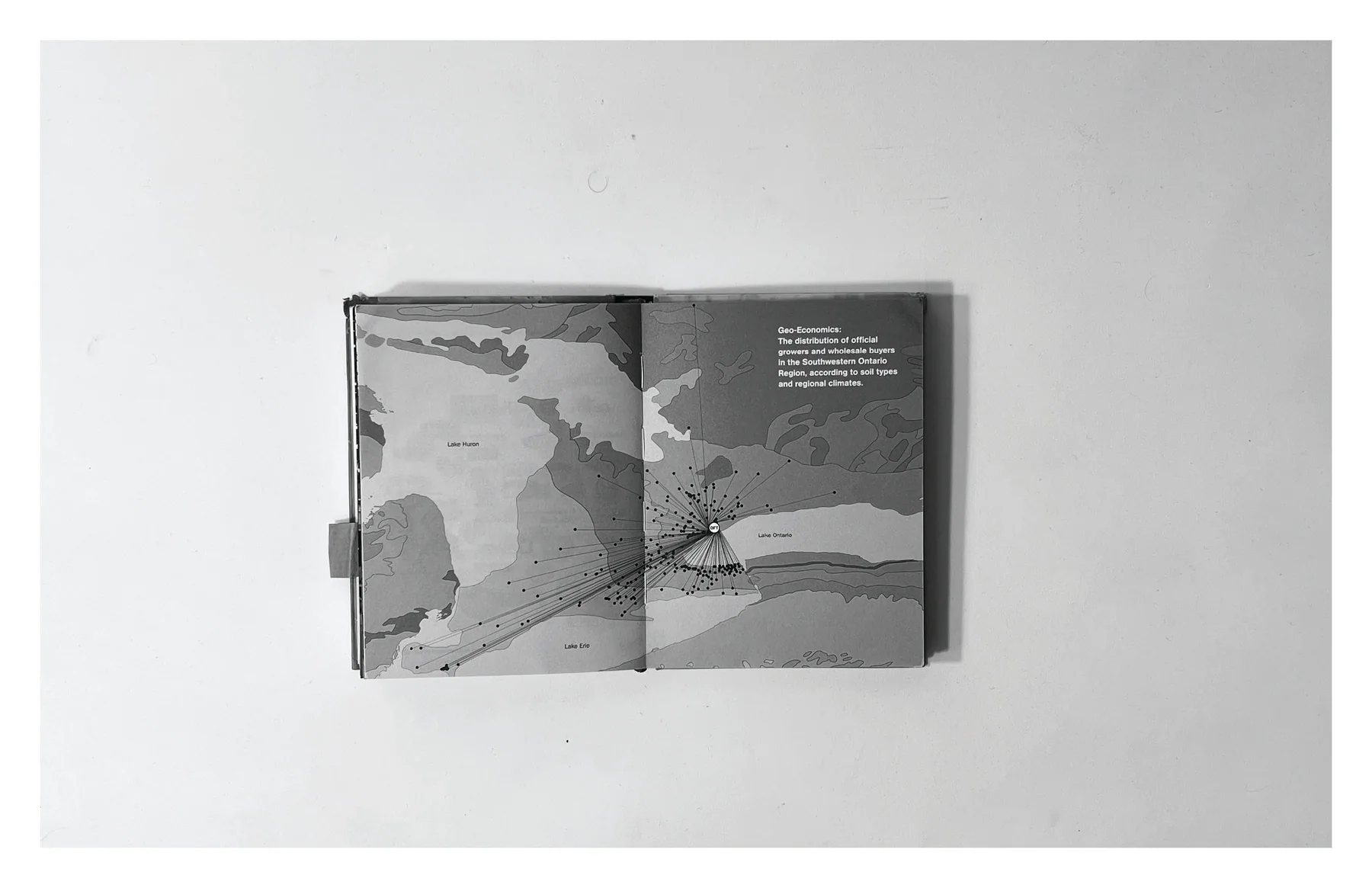
that connected local
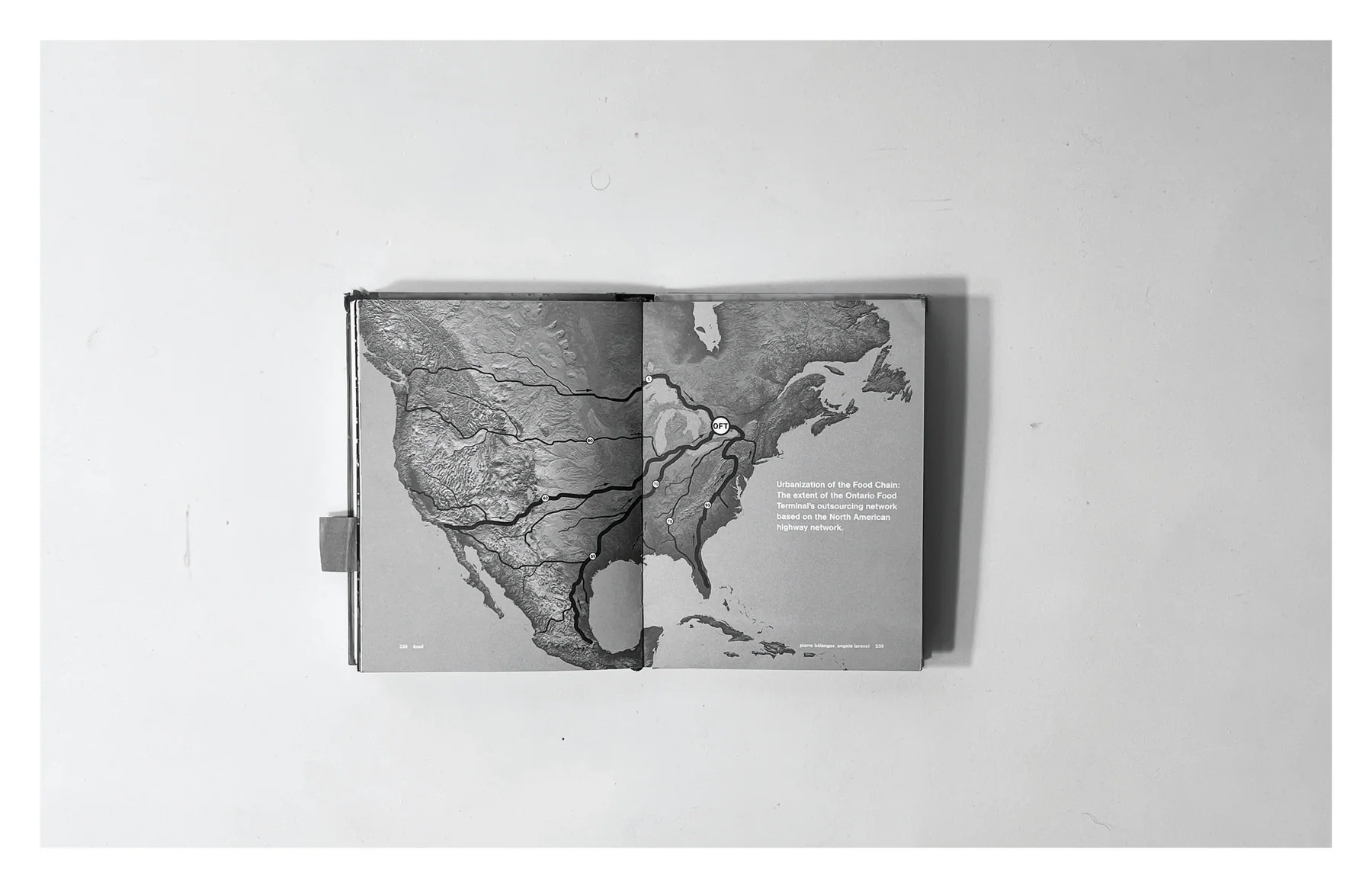
and global growers to more than 3,000 small and independent stores.
After learning about the terminal's unavoidable existence for small-scale food entities, my attention was grabbed by a few question marks and aspects that I was, and still am, cynical about. Such as, issues around labor practices.
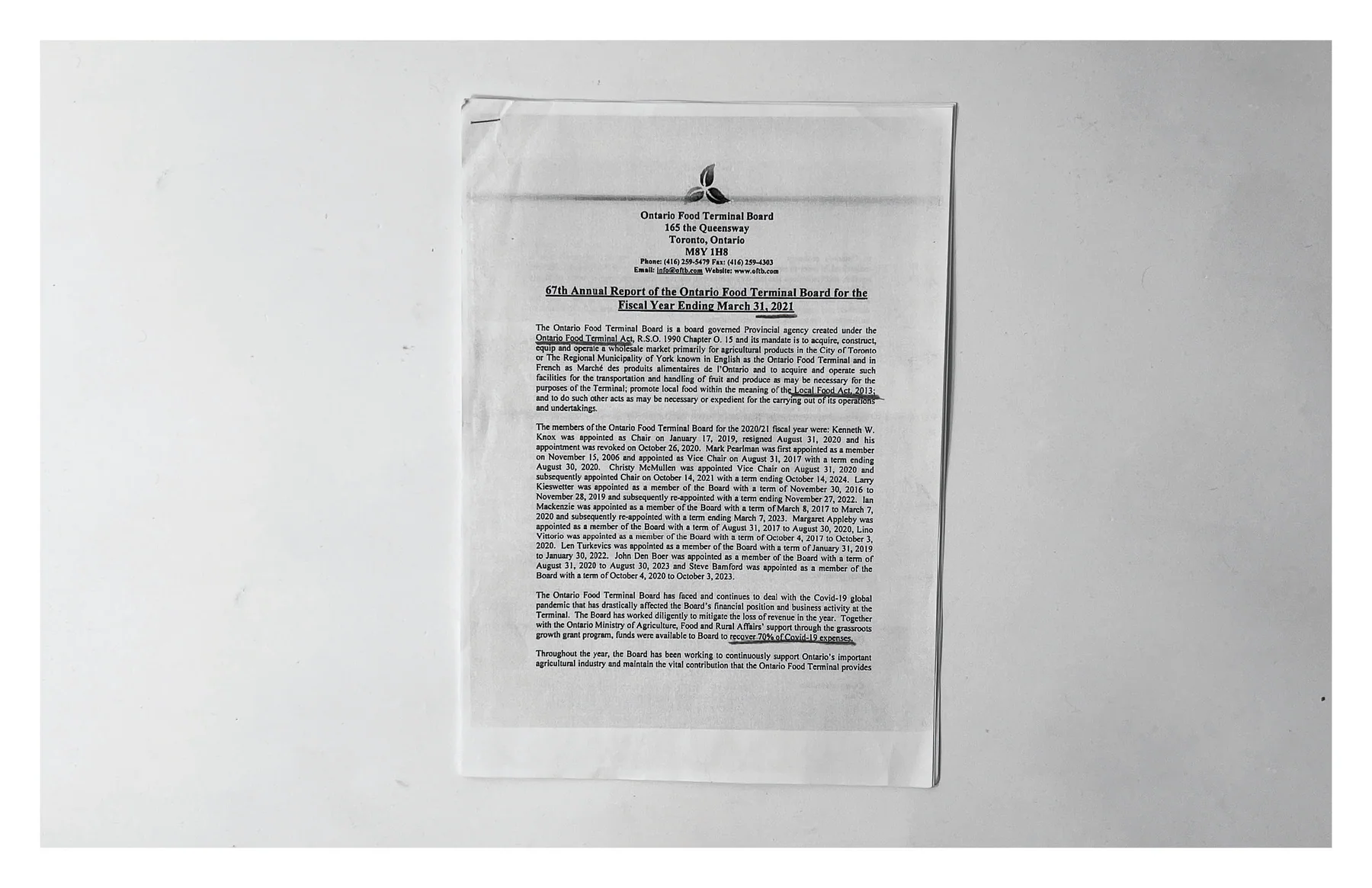
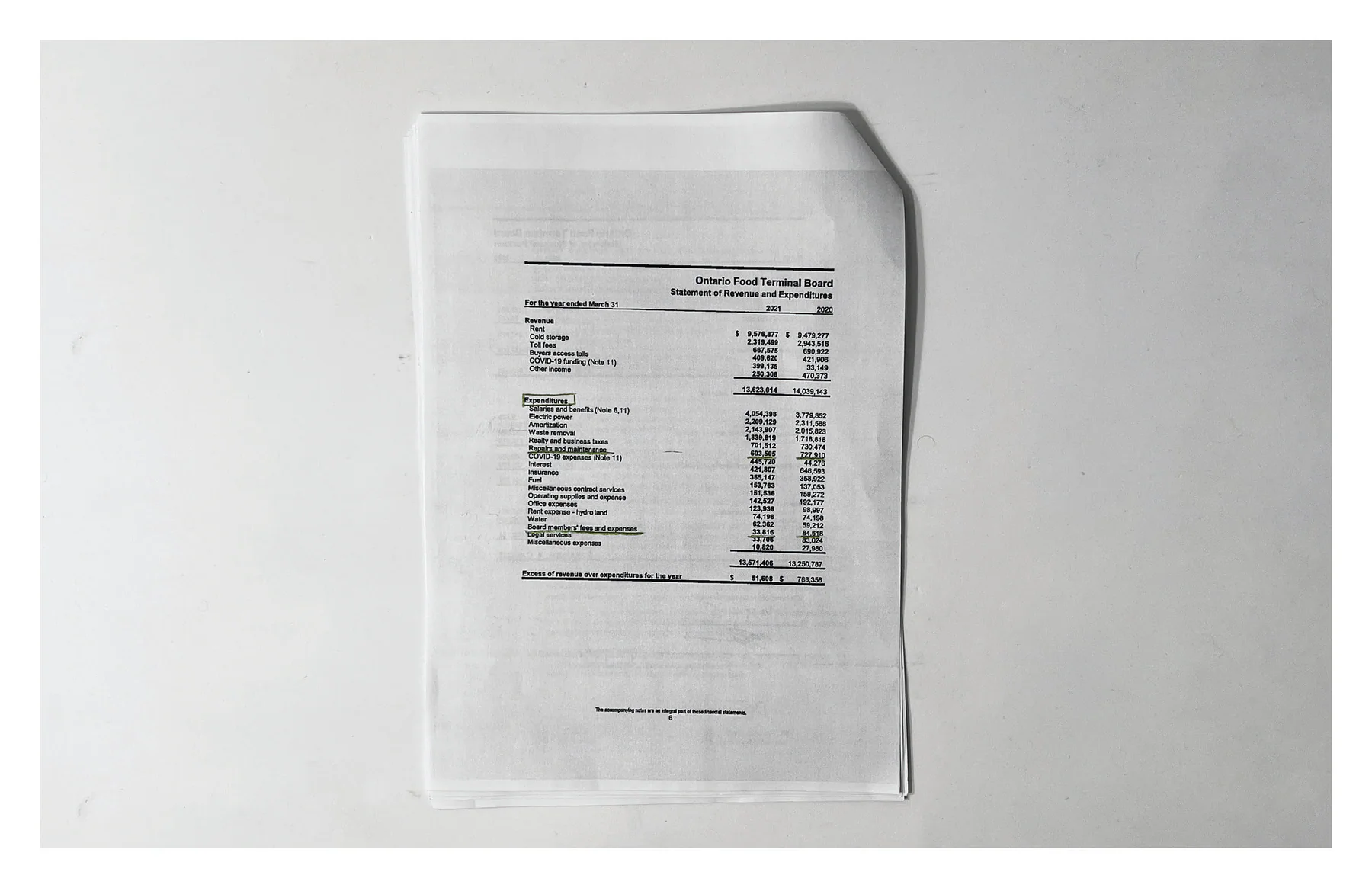
Questionable accounting and expenses.
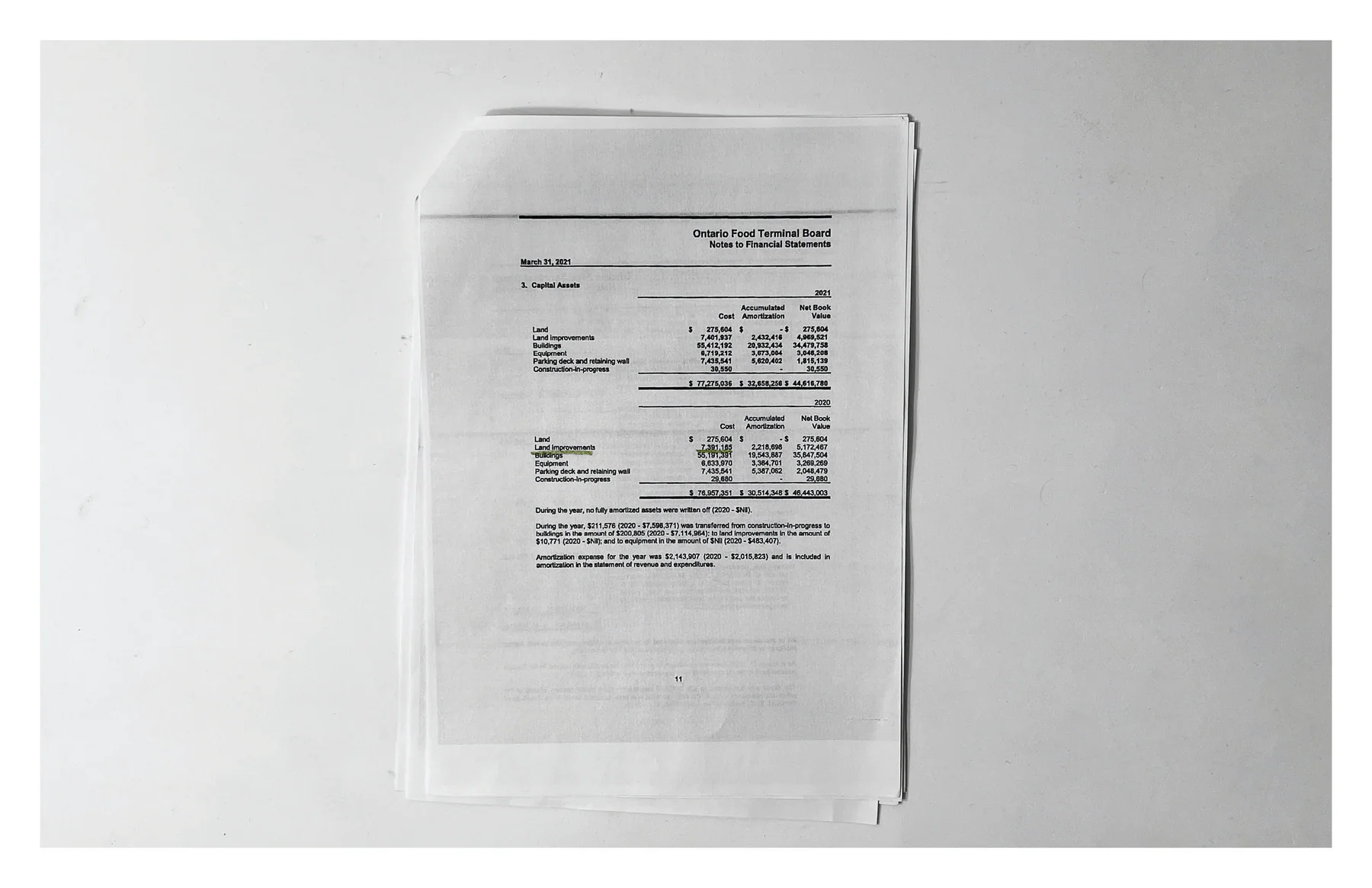
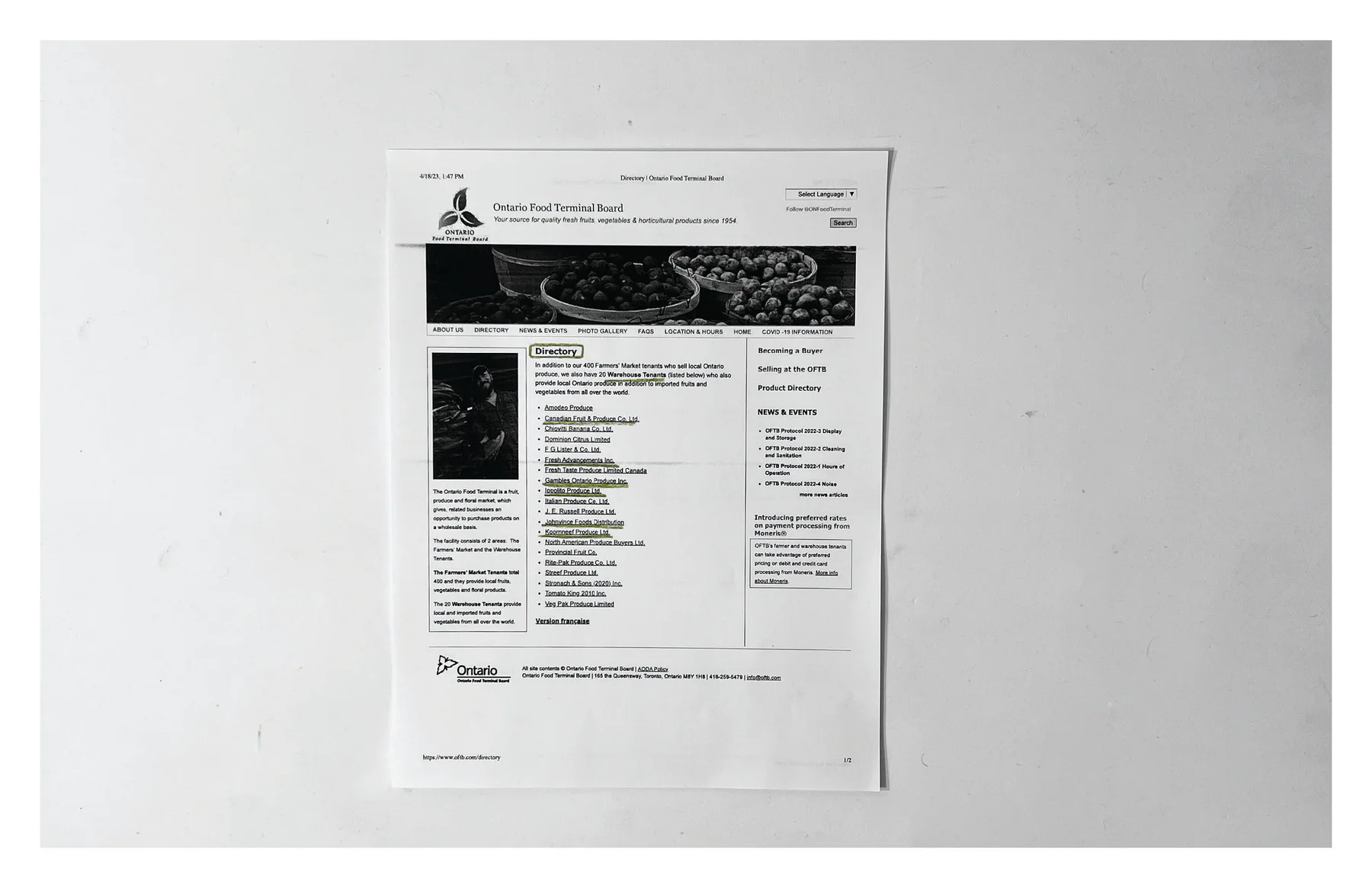
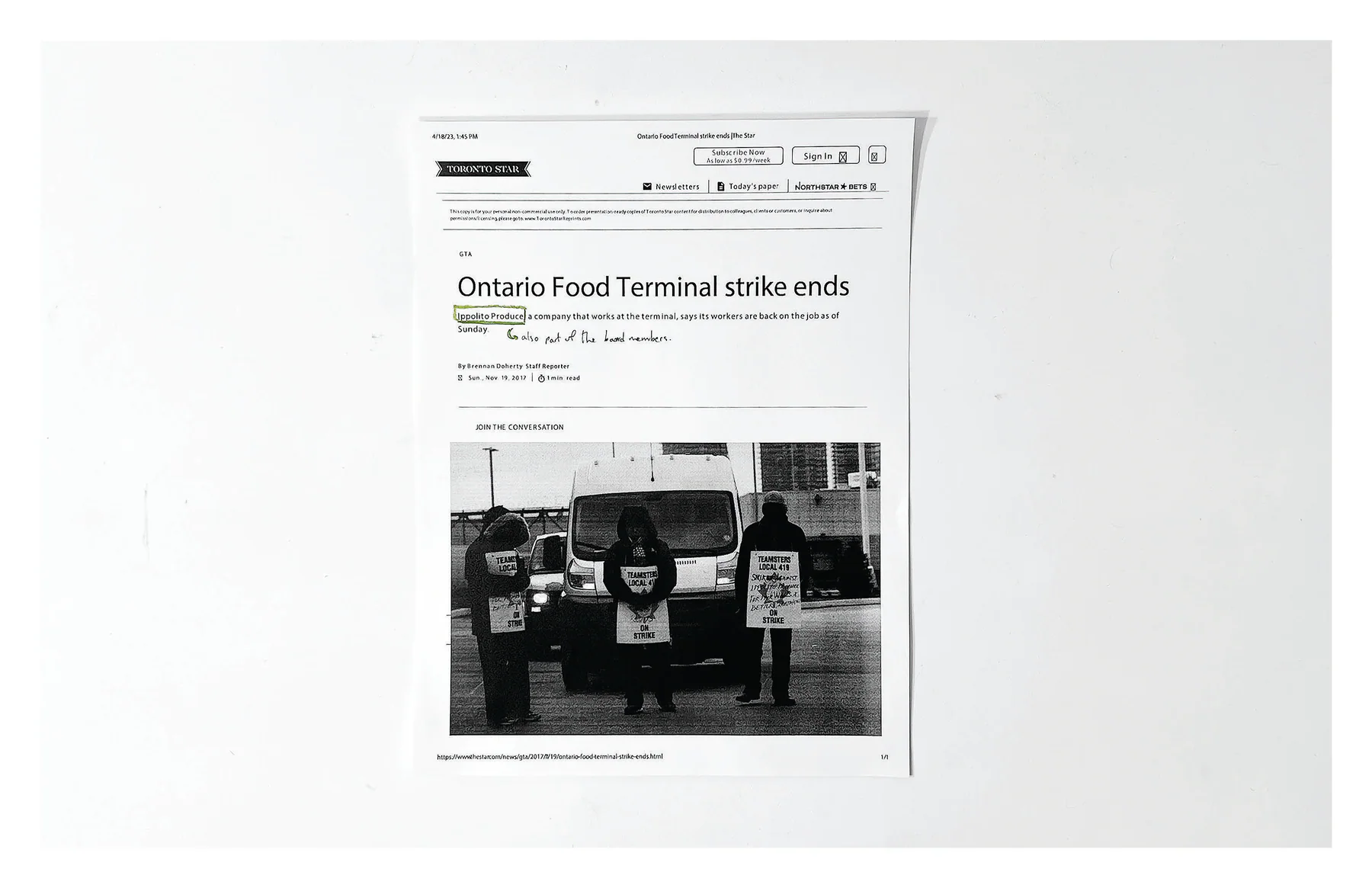
Issues around the monopolistic structure of the terminal, which is run by only 20 vendors, and has barely been replaced or changed ever since their move from the St Lawrence market because of the Terminal's inelastic rent structure.
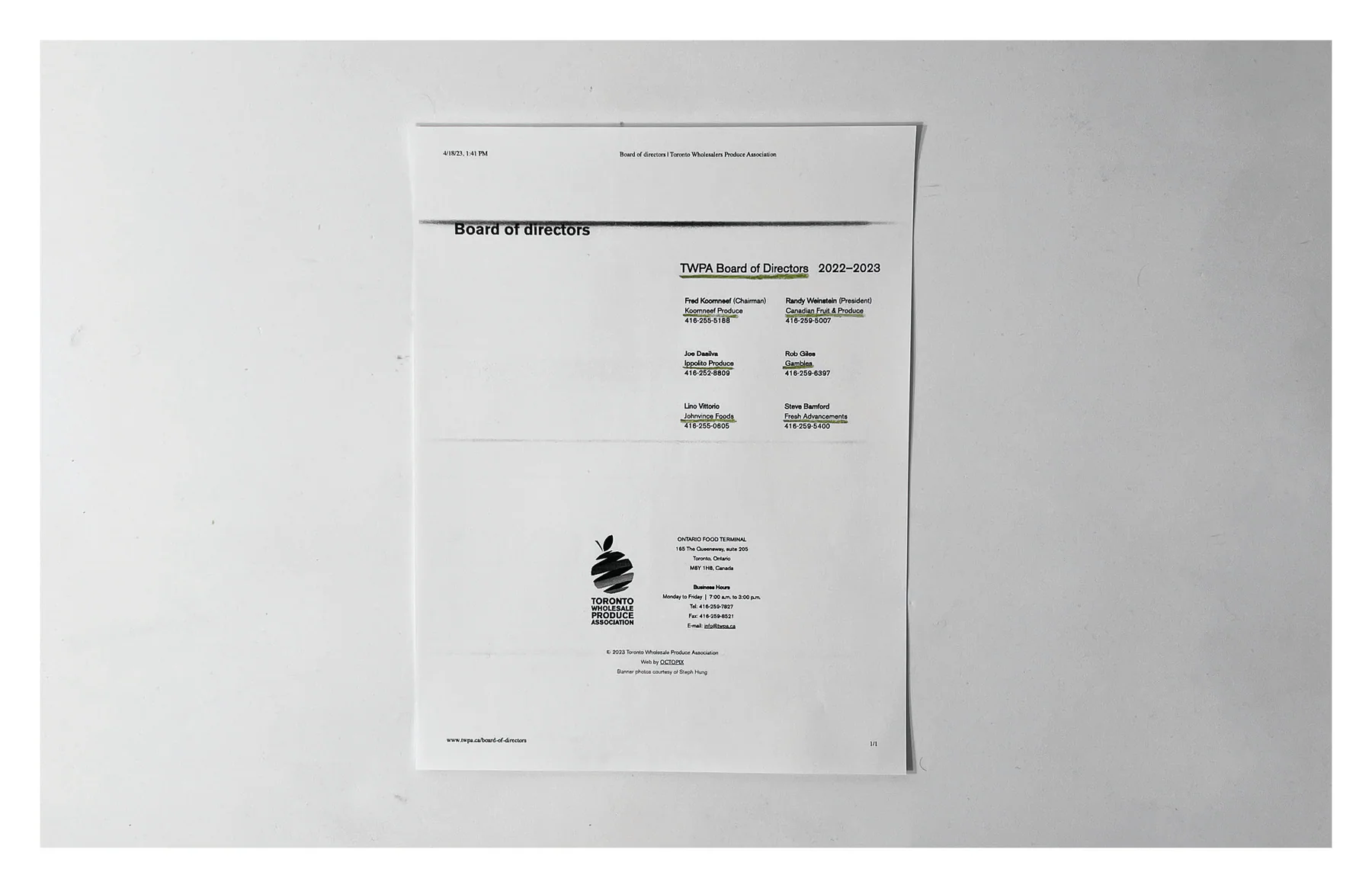
And the vendors are supervised by 6 members of a board of directors who happen to be the most powerful vendors in the terminal.
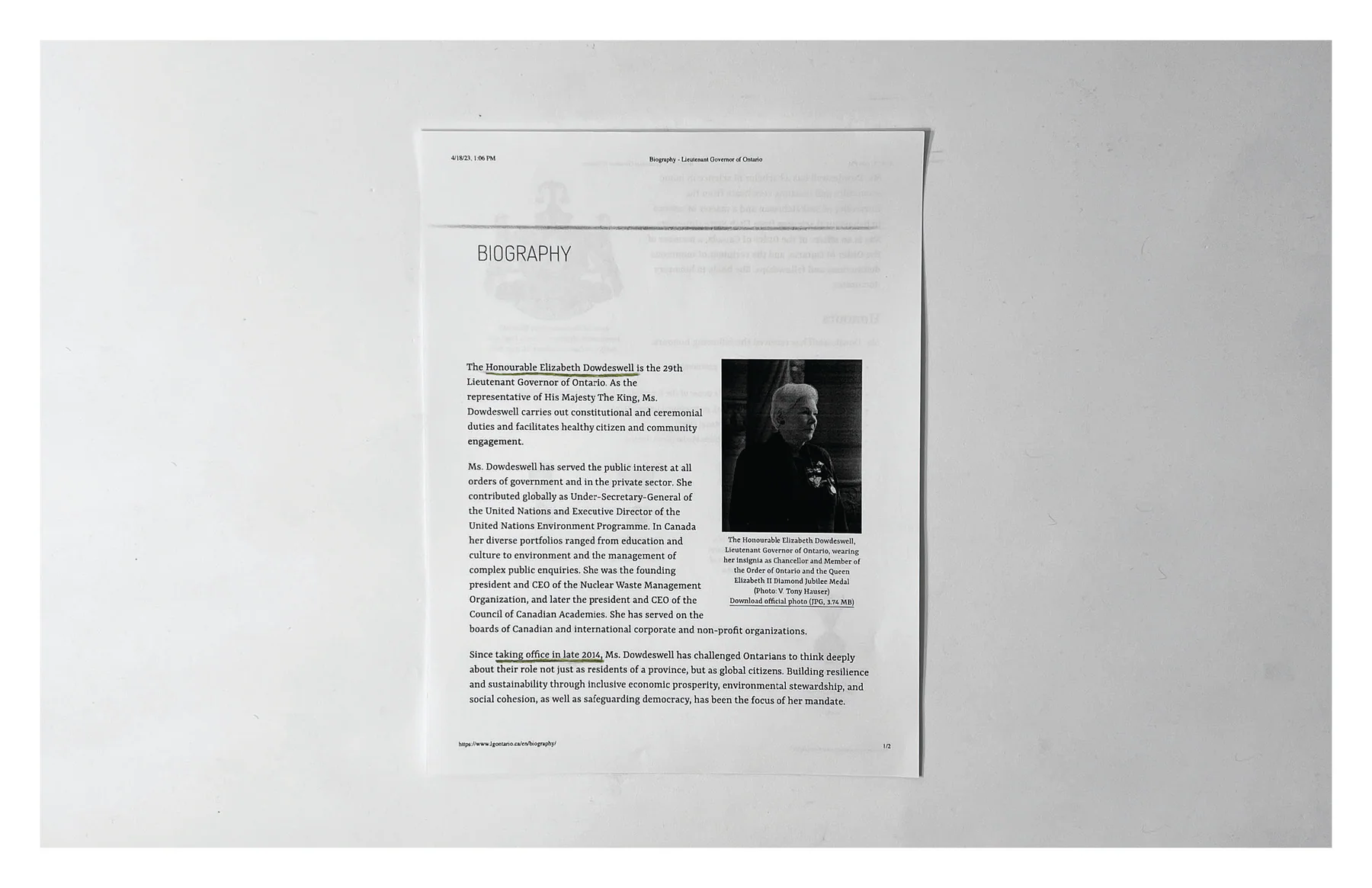
Who happen to be appointed by the Lieutenant Governor of Ontario. I needed to learn more about the terminal, not just its questionable history and finances, but also aspects such as its architecture, but it was really difficult as I couldn't find any architectural drawings or visit the terminal as a student since it can only be accessed by a registered food business.
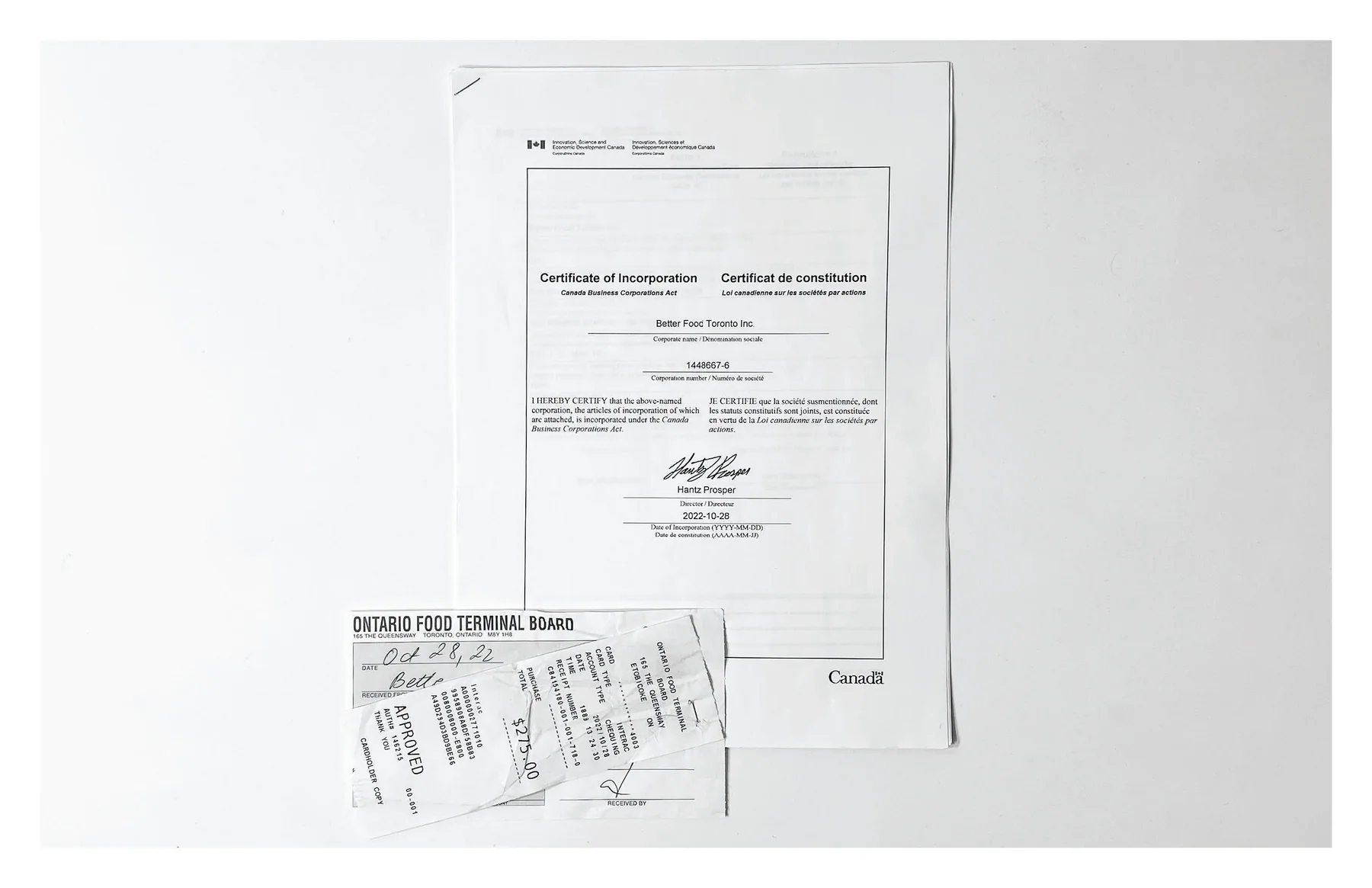
So I registered a food business called Better Food Toronto and went to the terminal with a hidden camera, and here is what I captured.
Video 1 — Hidden camera footage from Sam's first visit to the Ontario Food Terminal
The video shows me in the buyer court and shows my movement to an enclosed warehouse space where the 20 vendors quote on quote rent the space. This floor is like a busy stock market where the prices are set daily based on supply and demand, but you can still negotiate with the vendors depending on the volume, freshness of products, as well as your relationship with them.
Here is the second floor, where the offices are located; that's where I got the floor plans. And an open-air wholesale farmer's market, which is mostly inhabited by local farmers that pay a daily fee to take over the parking spot to wholesale their produce; the prices here are much lower, but the products are much more inconsistent as the farms are smaller and constrained by Ontario's climate.
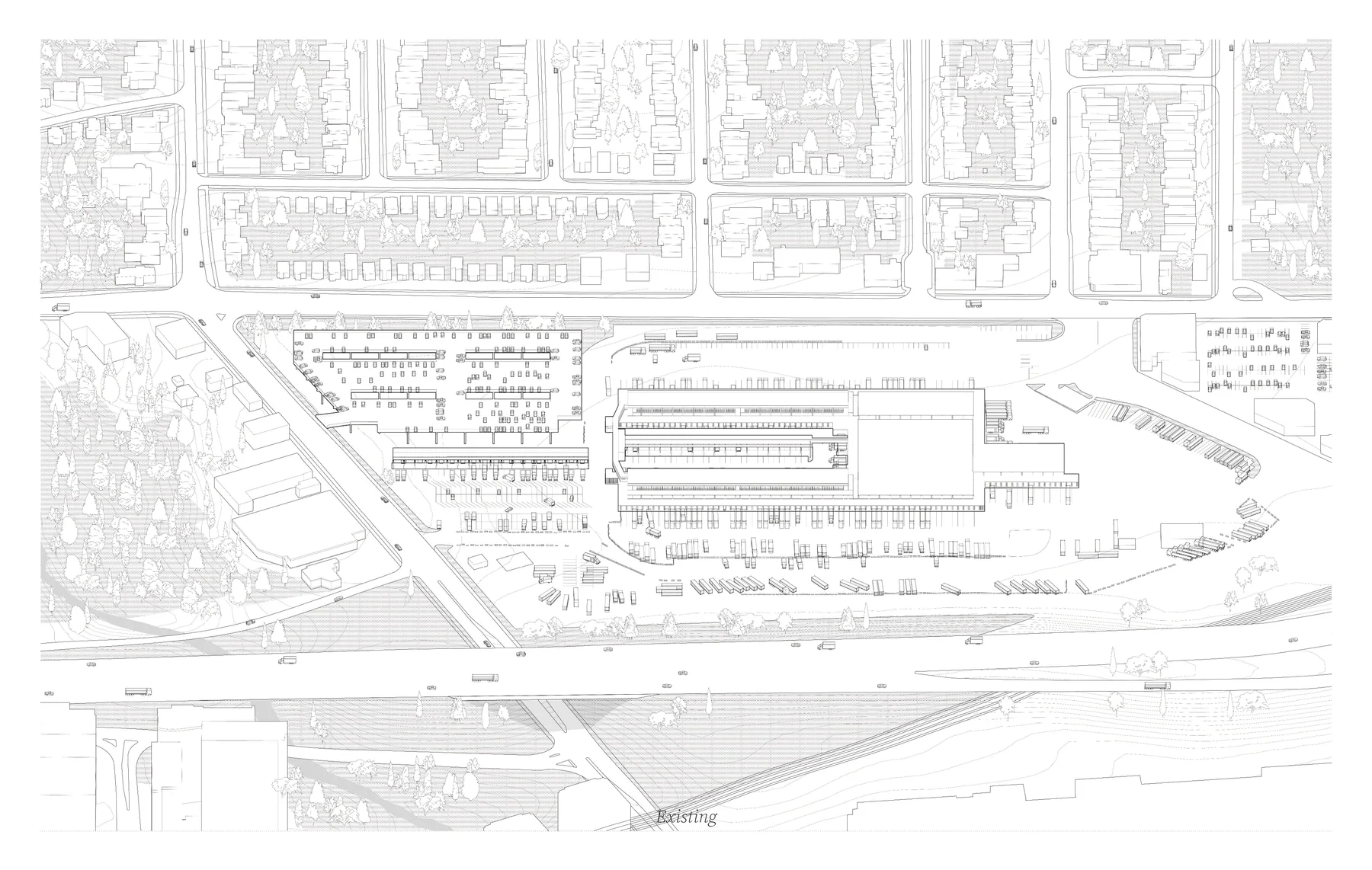
So this video that I took last semester allowed me to digitally construct the terminal
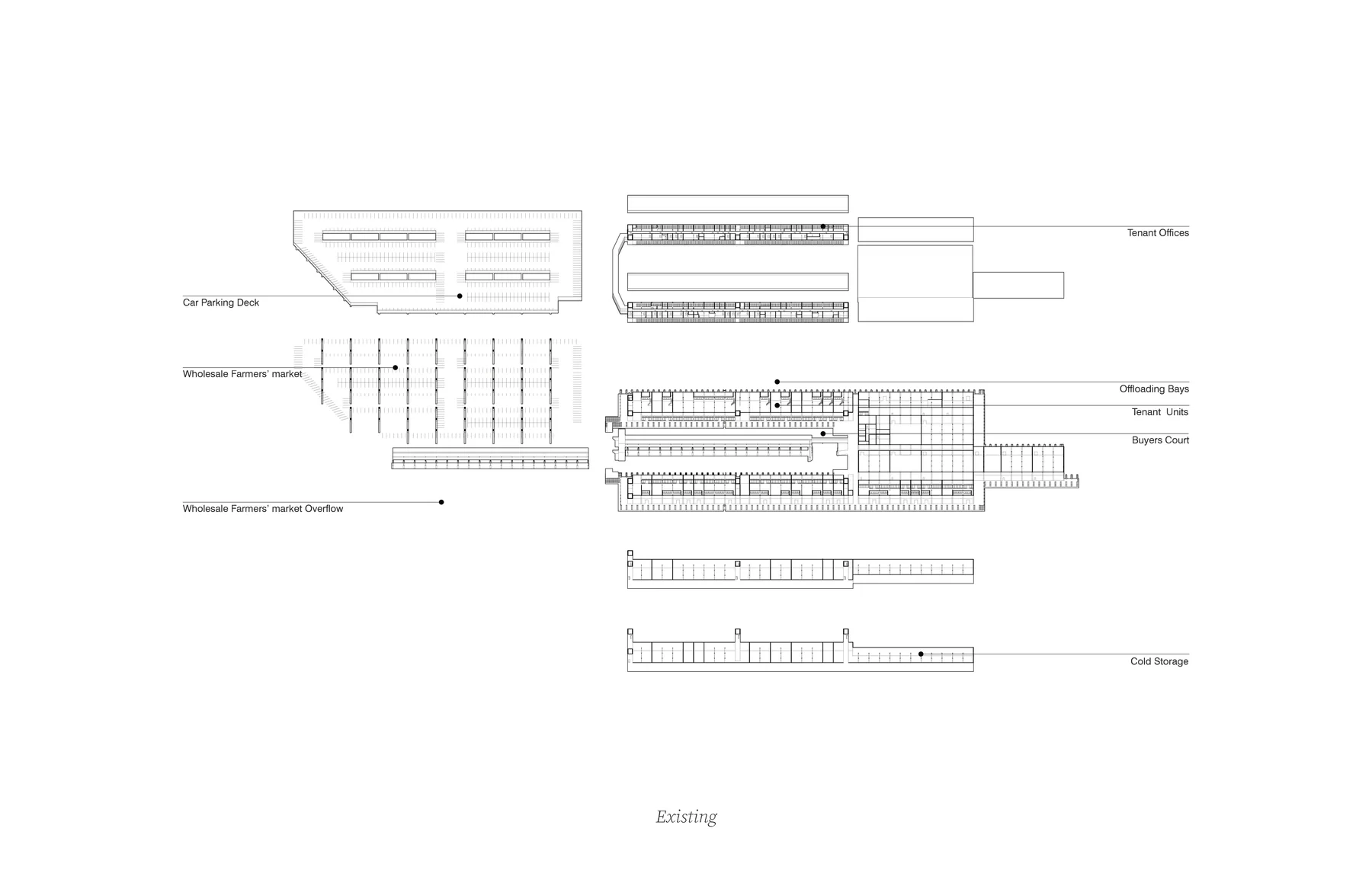
and diagram it.
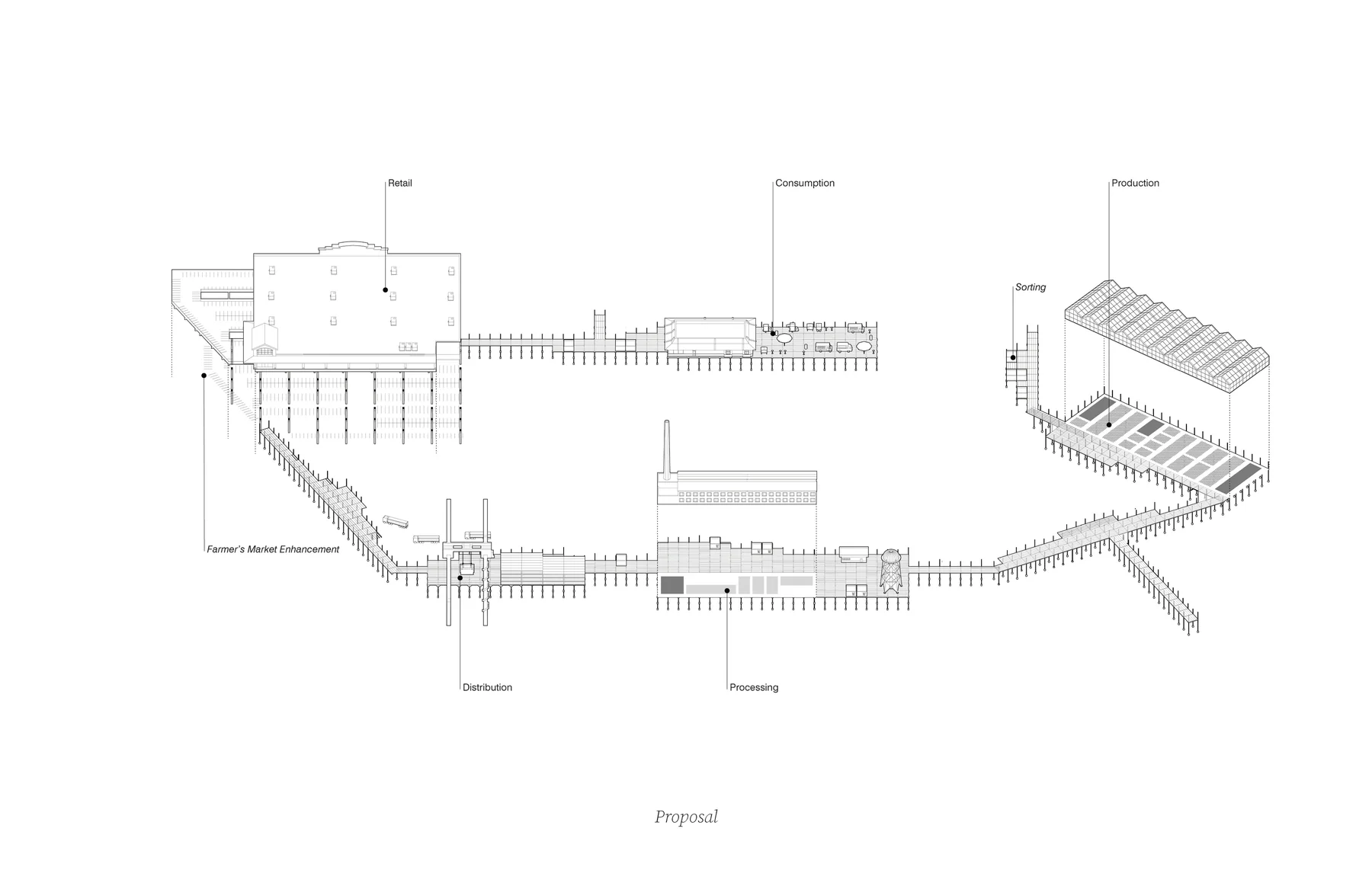
And right after this stage, last semester, I thought I could come up with a large-scale architectural proposal that could make it better.
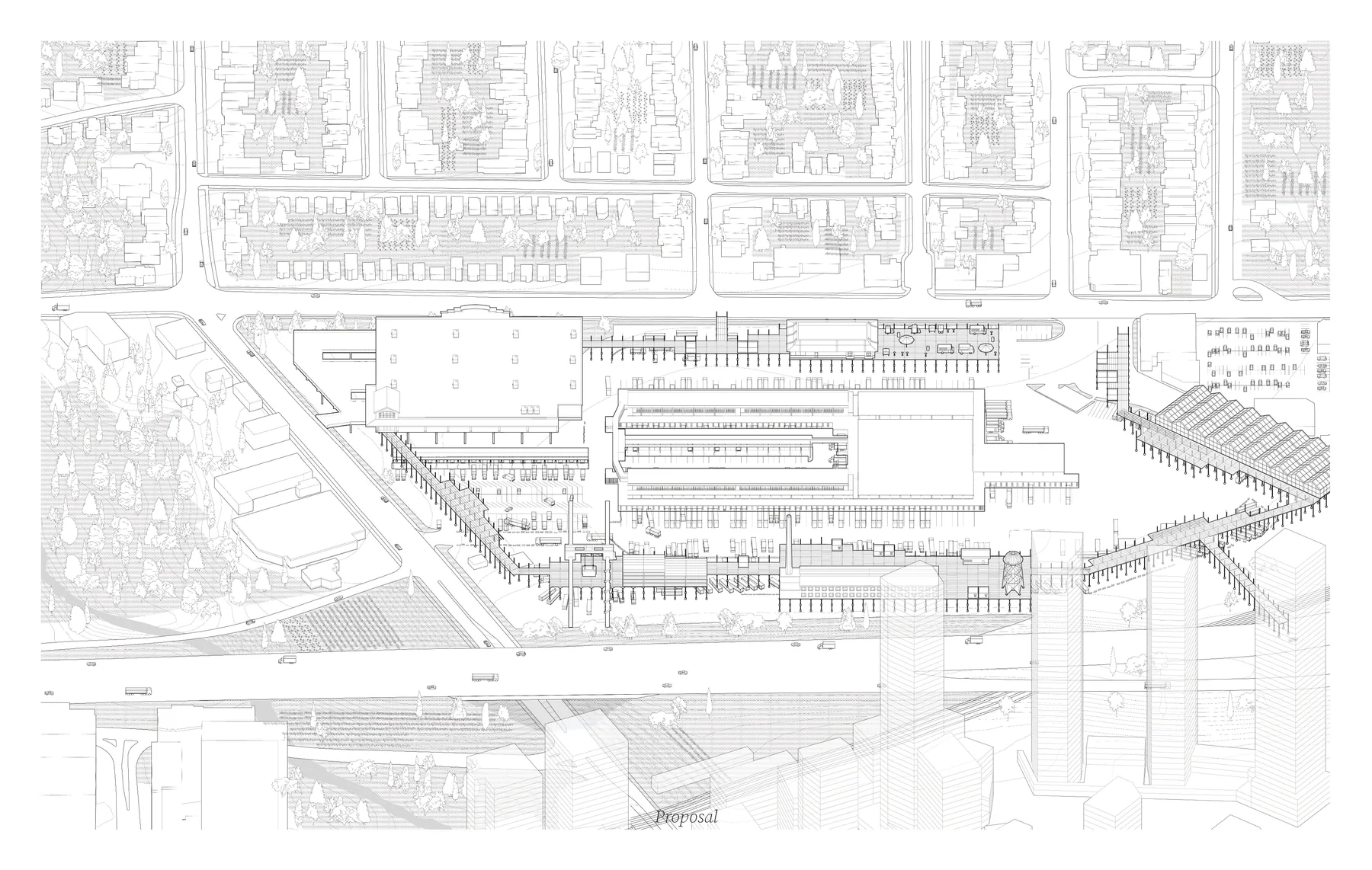
But I hated the proposal as it was too ambitious and immature, and there was still so much I thought I didn't know about the terminal. Such as how people and businesses interact with the terminal and other parts of the food system in general.
The Tomato Soup Story
Using myself as a test subject within the food system
So I used my business and myself as an example and start the next chapter, The Tomato Soup Story.
I went to the terminal with my friend Shayan and bought tomatoes to make tomato soup, and decided to improvise my way through the system. The background conversation is me chatting with someone in the city to get permission for this intervention.
Video 3 — The full tomato soup intervention: buying tomatoes at the Food Terminal, making soup, setting up a public table, donating food. Background audio: Sam calling the City of Toronto for permission.
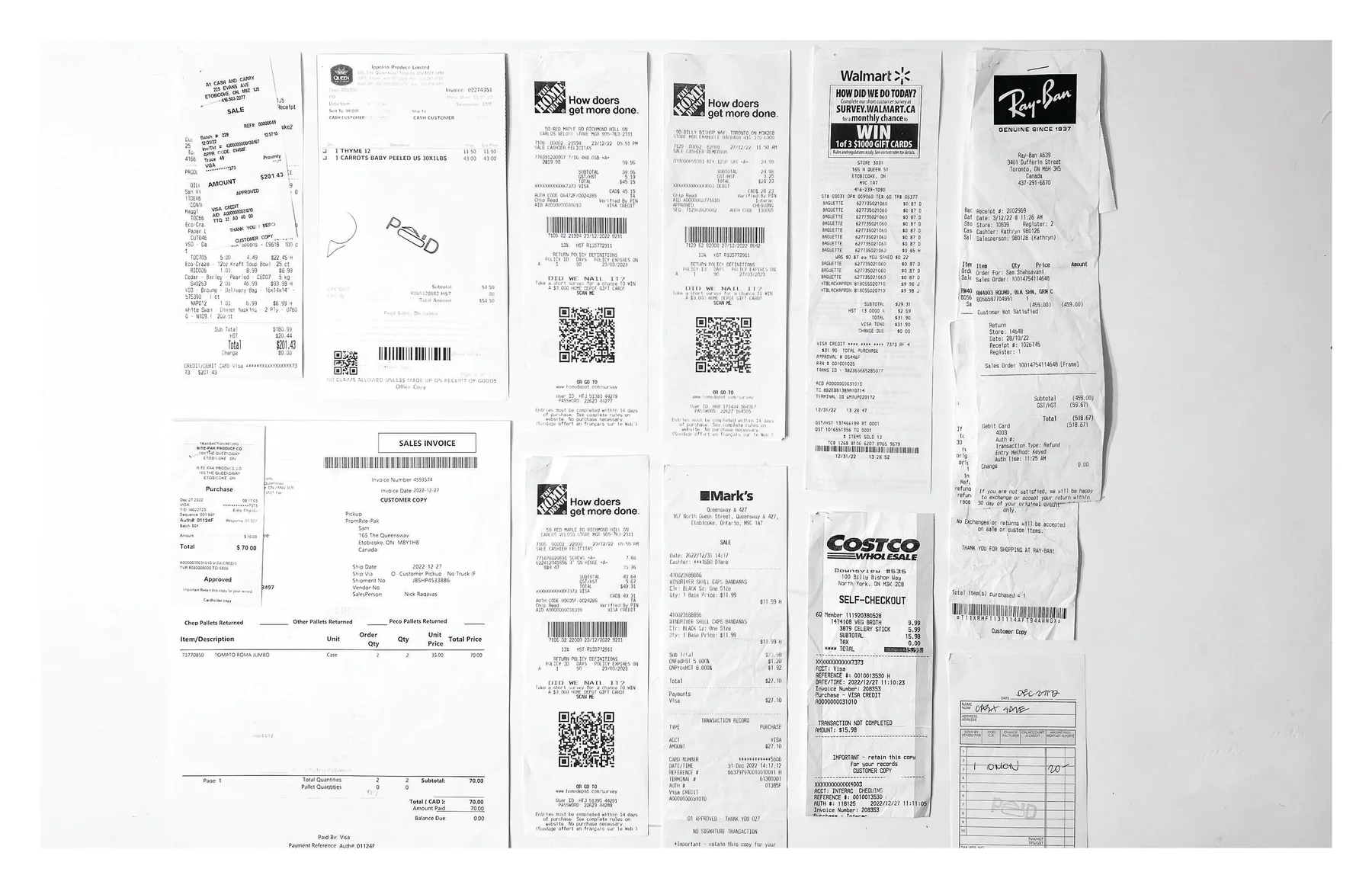
And here are some receipts from the intervention.
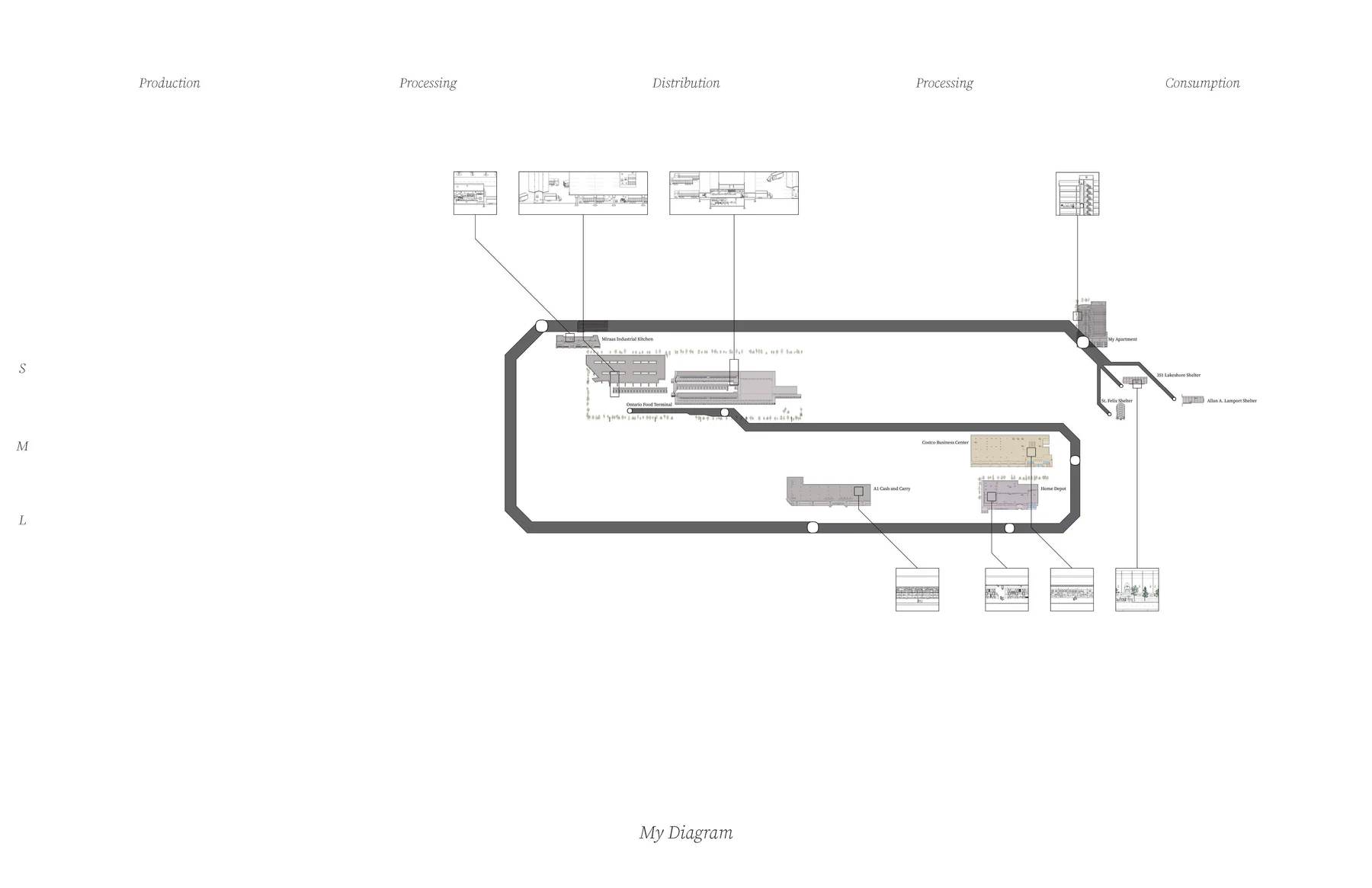
The intervention was very helpful because it allowed me to diagram my direct interaction in the food system, shown with the black line.
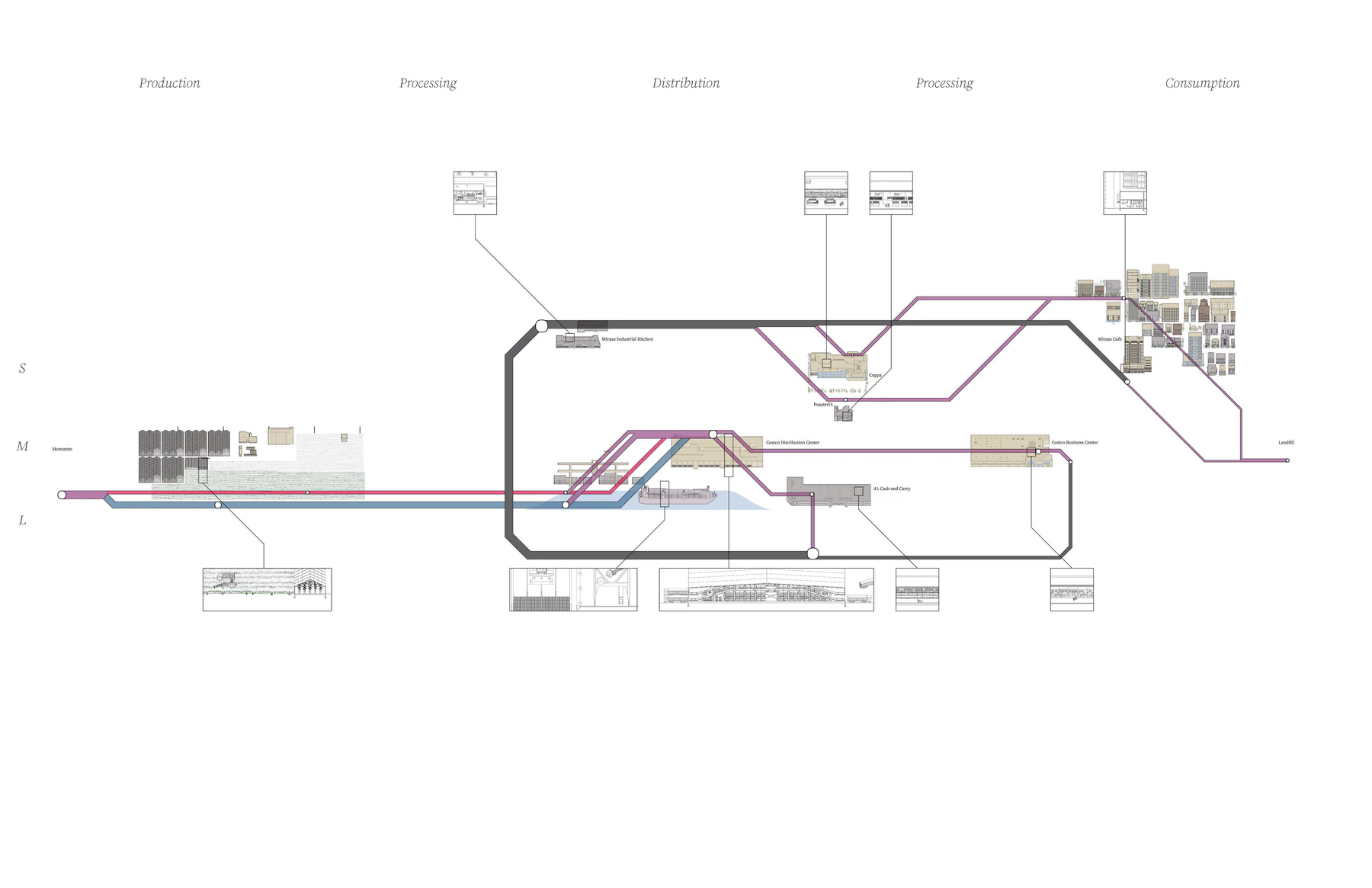
And my indirect interaction with the system, all the way from the person selling the seeds to the farmer, the farmer to the distributor, the distributor to retail, retail to me as the consumer, and my waste to the landfill. The colors red and blue represent the colder and warmer seasons.
I needed more, one intervention wasn't enough to understand this complex system.
People's Story
Nine interviews that rebuilt the network from real experience
So I went ahead and interviewed 9 restaurant owners and sometimes even volunteered for them.
Video 2 — Teaser of Sam interviewing and volunteering for food entrepreneurs across Toronto
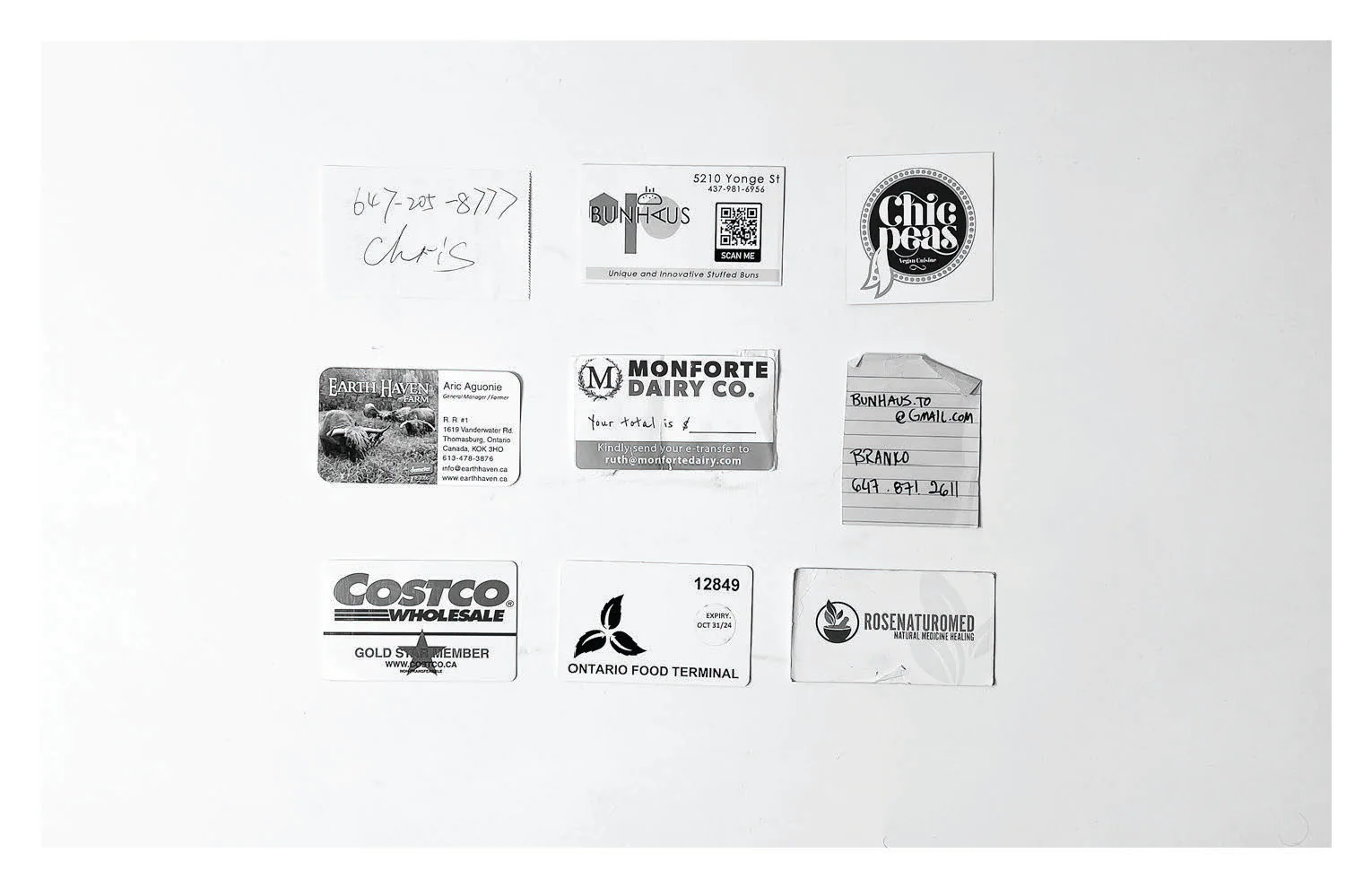
Their story allowed me to reconstruct the first network diagram that I had built using the online resources and articles that I had read and replace it with a new one that is mostly based on the buildings I visited during my interviews and infrastructures that were mentioned in people's stories.
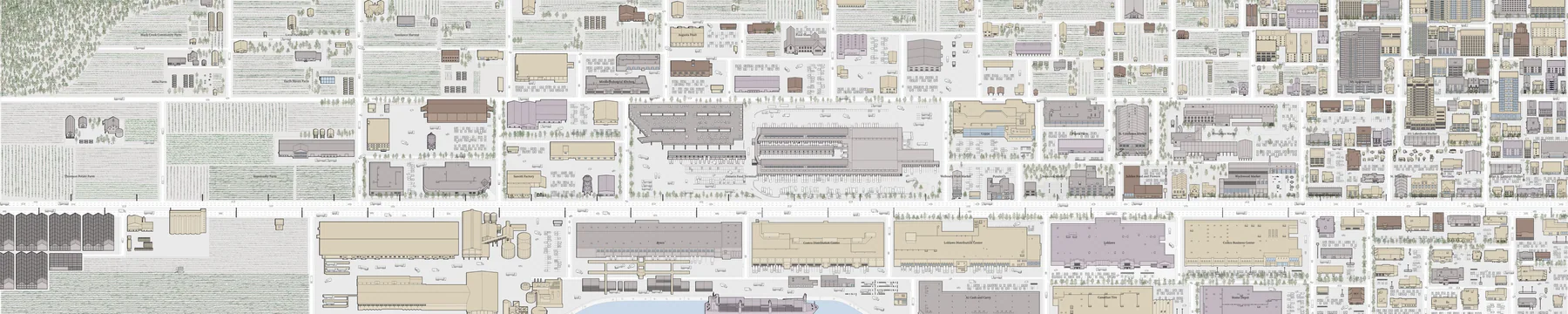
The Colored Network Drawing — the original line-drawing catalog from Chapter 1, now alive with color and reality after conducting interviews and directly engaging with the food system. Physically unfolded behind the audience during the live presentation.
At this point, my story started to depart from the terminal itself and was more focused on the people, their stories, and challenges in the food system, but regardless, I started diagramming their stories and arranging them based on their level of interaction and dependence on the terminal.
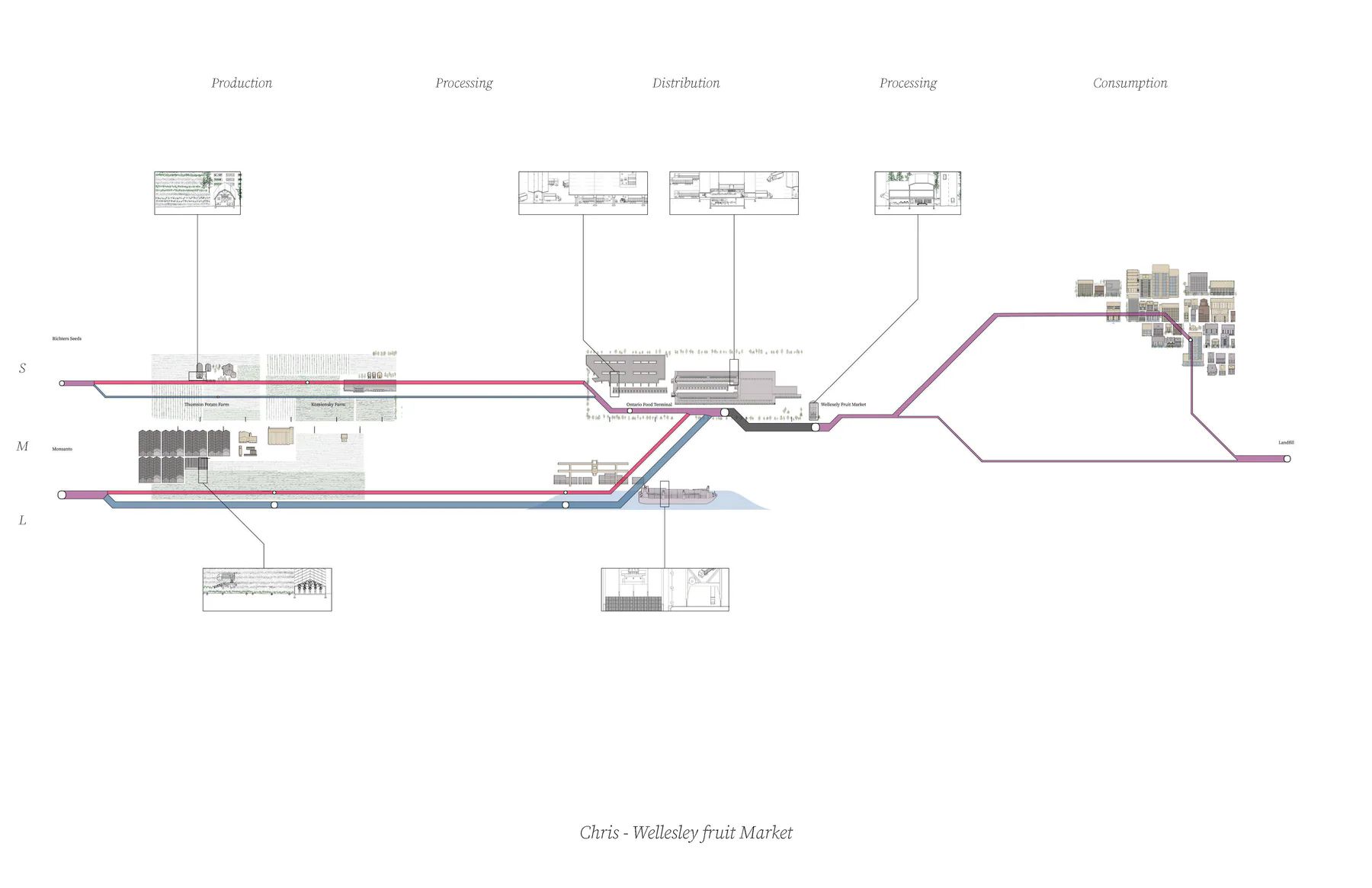
Chris - Wellesley Fruit Market
So let's start with Chris, who has a small fruit and vegetable store and has to visit the terminal every morning before his store opens.
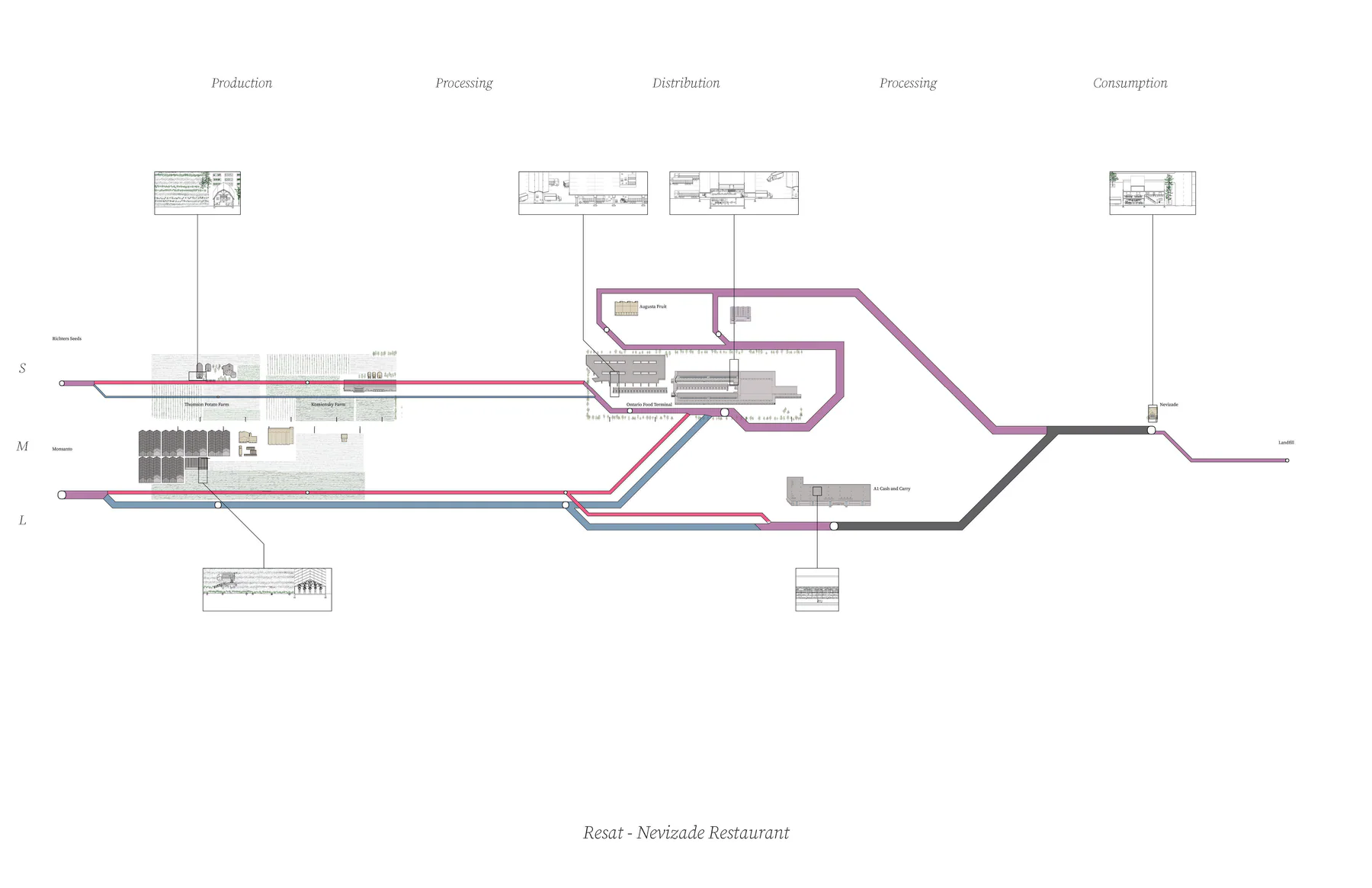
Resat - Nevizade Restaurant
Next, we have Resat, who is a co-owner of a Turkish restaurant that gets their fruits and vegetables from middlemen and suppliers who work with the Food terminal.
Leila - Miraas Cafe
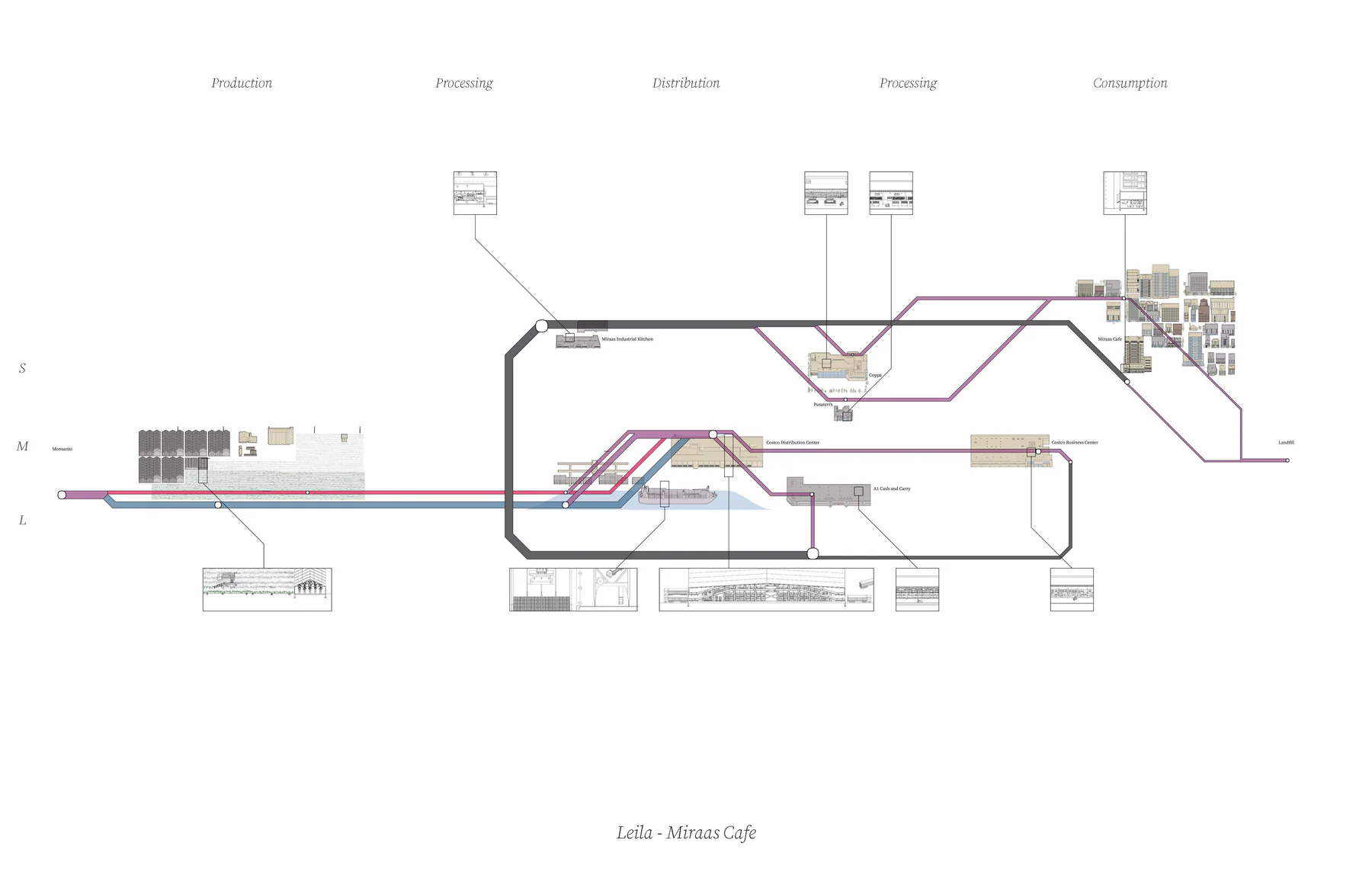
Next, we have Leila, who owns a cafe called Miraas. She has less of an engagement with the terminal and instead relies on large industrial entities such as Costco and Cash and Carry as they provide a convenient one-stop shop.
Branko - Bunhaus
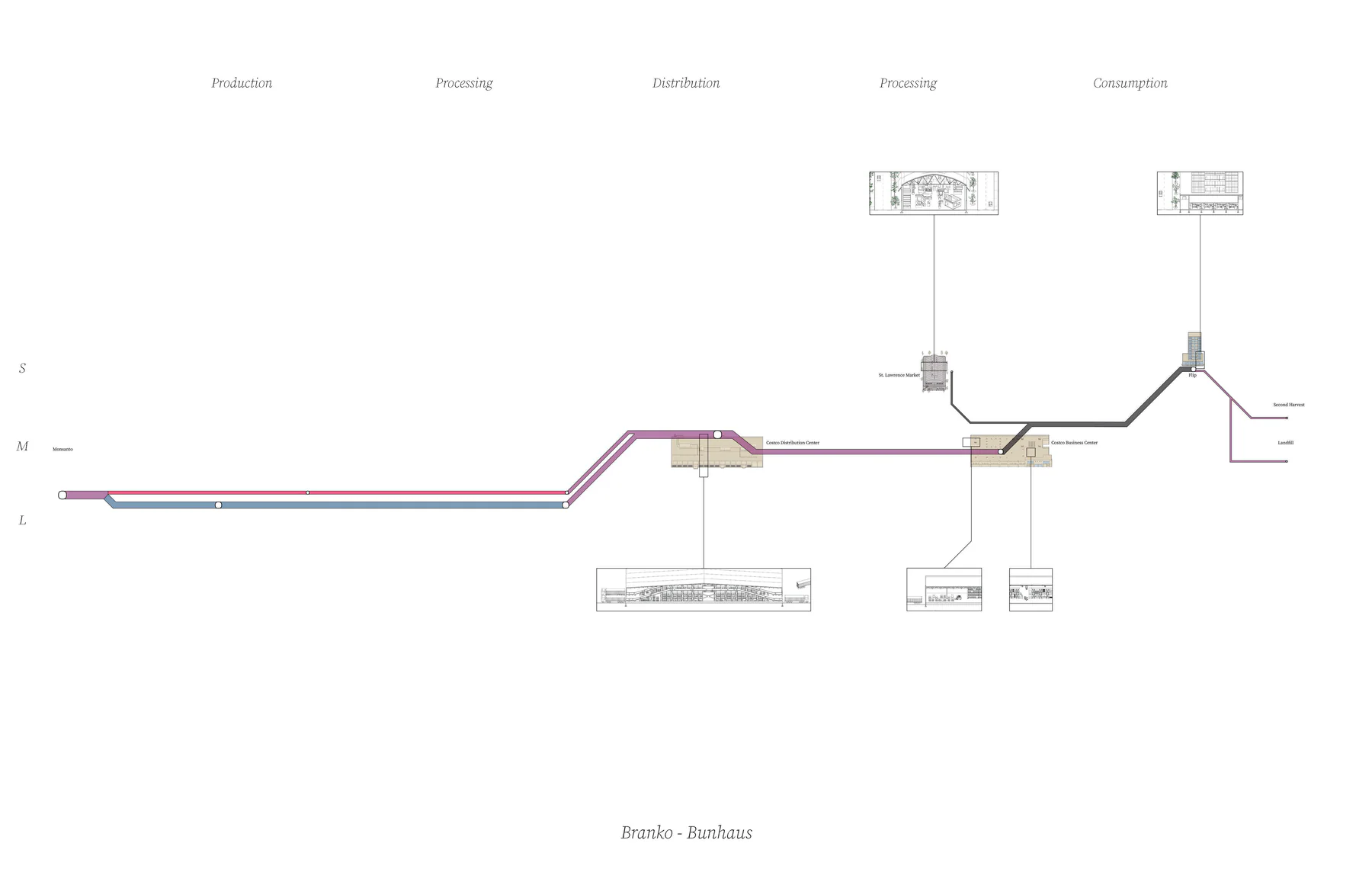
We have Branko, who used to own a restaurant called Bunhaus at the flip kitchen space in North York that was designed as an incubation space for food entrepreneurs. He became a dear friend of mine, and he introduced me to another dear friend of mine, her neighbor Naza, who is here today. He, unfortunately, had to close his store. In his words during our chats and interviews, as a small independent restaurant competing with large franchise stores that are driving the rent up in the city and who are at a position of advantage due to various reasons such as affording the cost of rent, access to cheap materials and storage, is extremely challenging. His food network mostly relied on Costco, and he only used St Lawrence market for artisanal products.
Hooman - Sanotti
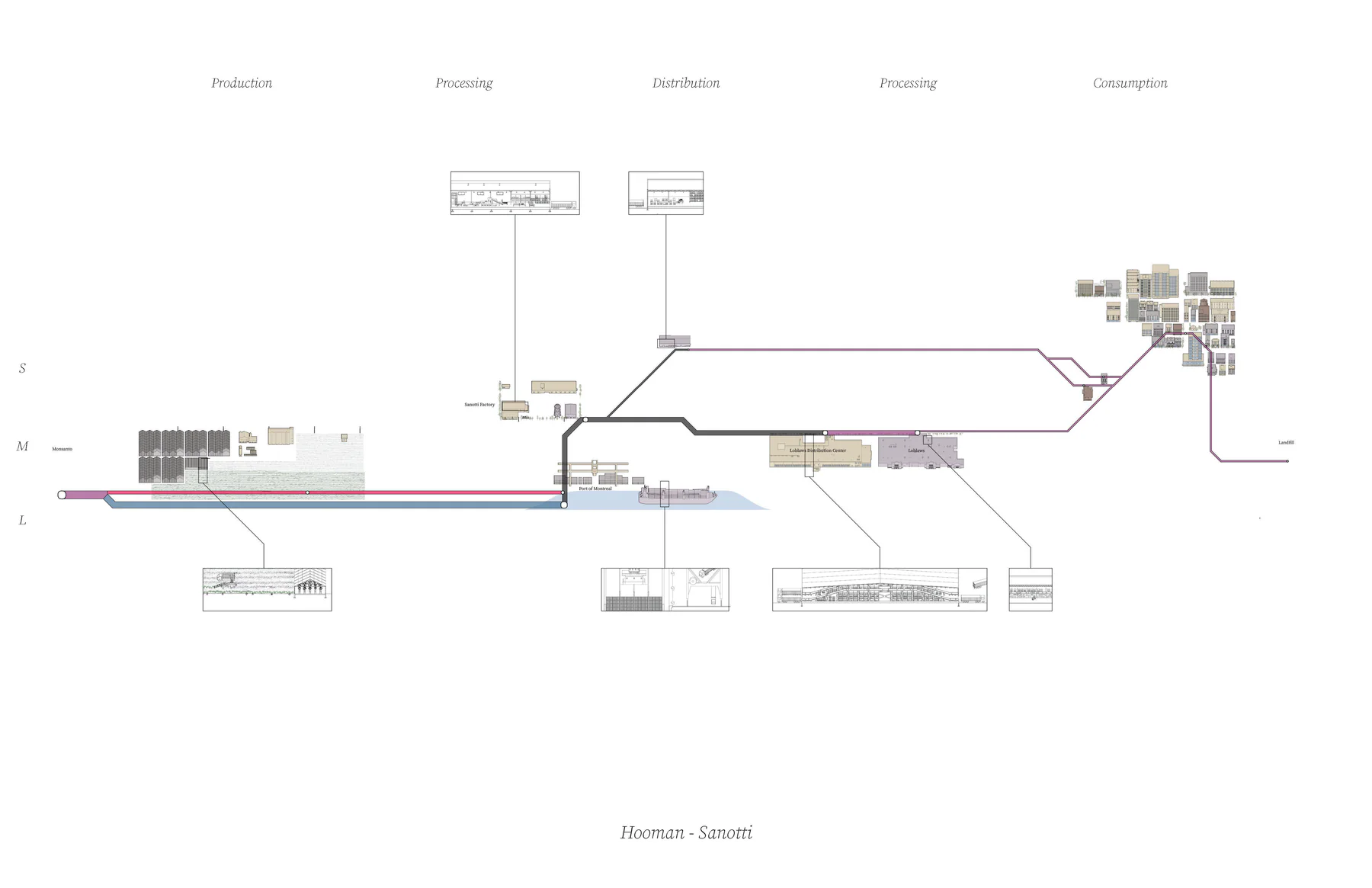
Next, we have Hooman, who works at a chocolate factory that uses a lot of sesame seeds that they import from Humera in Ethiopia. Every three months, they purchase a shipping container packed with sesame seeds that they pick up from the Montreal Port. They turn it into a wide range of products which they then drop off at the Loblaws and Walmart distribution centers.
Naza - Chic Peas Veg
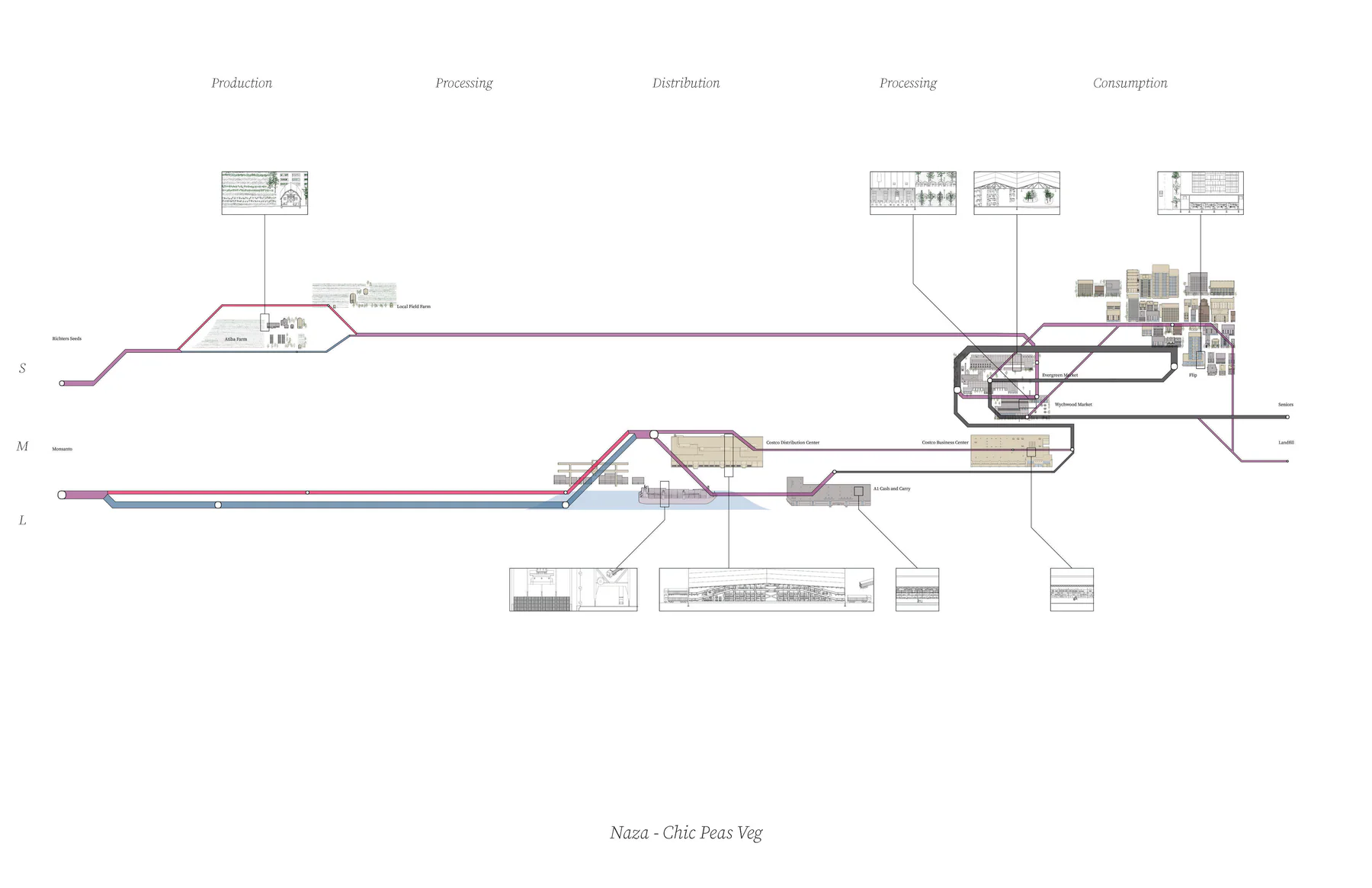
We have Naza, who kindly attended the presentation. She has created this highly complex and beautiful network that works with small independent farmers at the production stage and an incubation space and farmers markets at the processing and consumption stage. Despite her amazing network, she is still forced to rely on large industrial entities such as Cash and Carry and Costco for sourcing products that aren't accessible from small local businesses. She told me a lot of beautiful stories that explained her background in food as well as sad stories that explained how challenging running a small independent food business in Toronto is, for reasons such as the high cost of rent, staffing, and lack of access to information and physical storage.
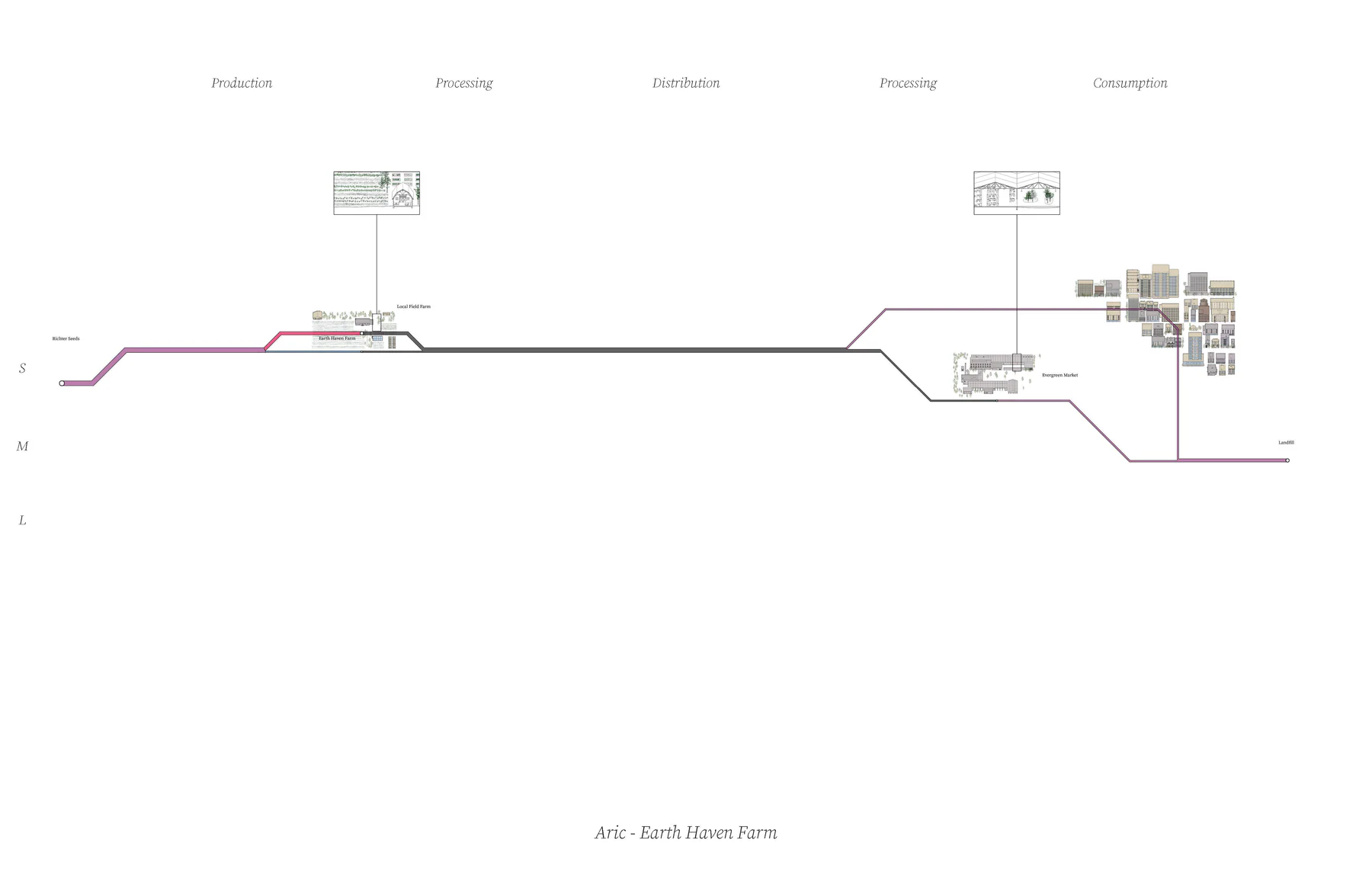
Aric - Earth Haven Farm
We have Aric, that has a small farm and sells his products at the Evergreen farmers market on Saturdays.
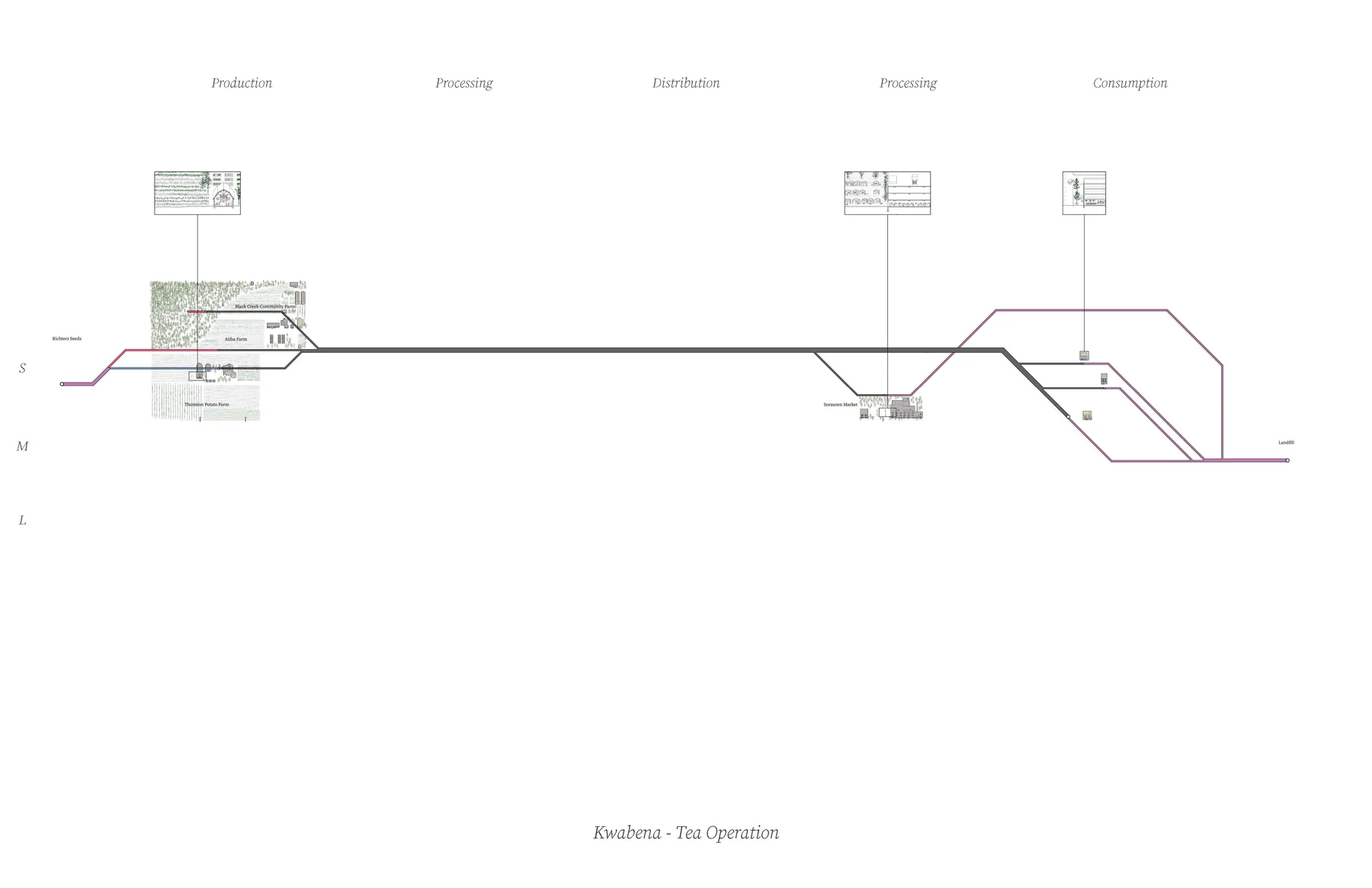
Kwabena - Tea Operation
We have Kwabena, who works for Naza but also runs his tea business; he relies on foraging and working on small plots of farms that he rents from Kijiji to run his business.
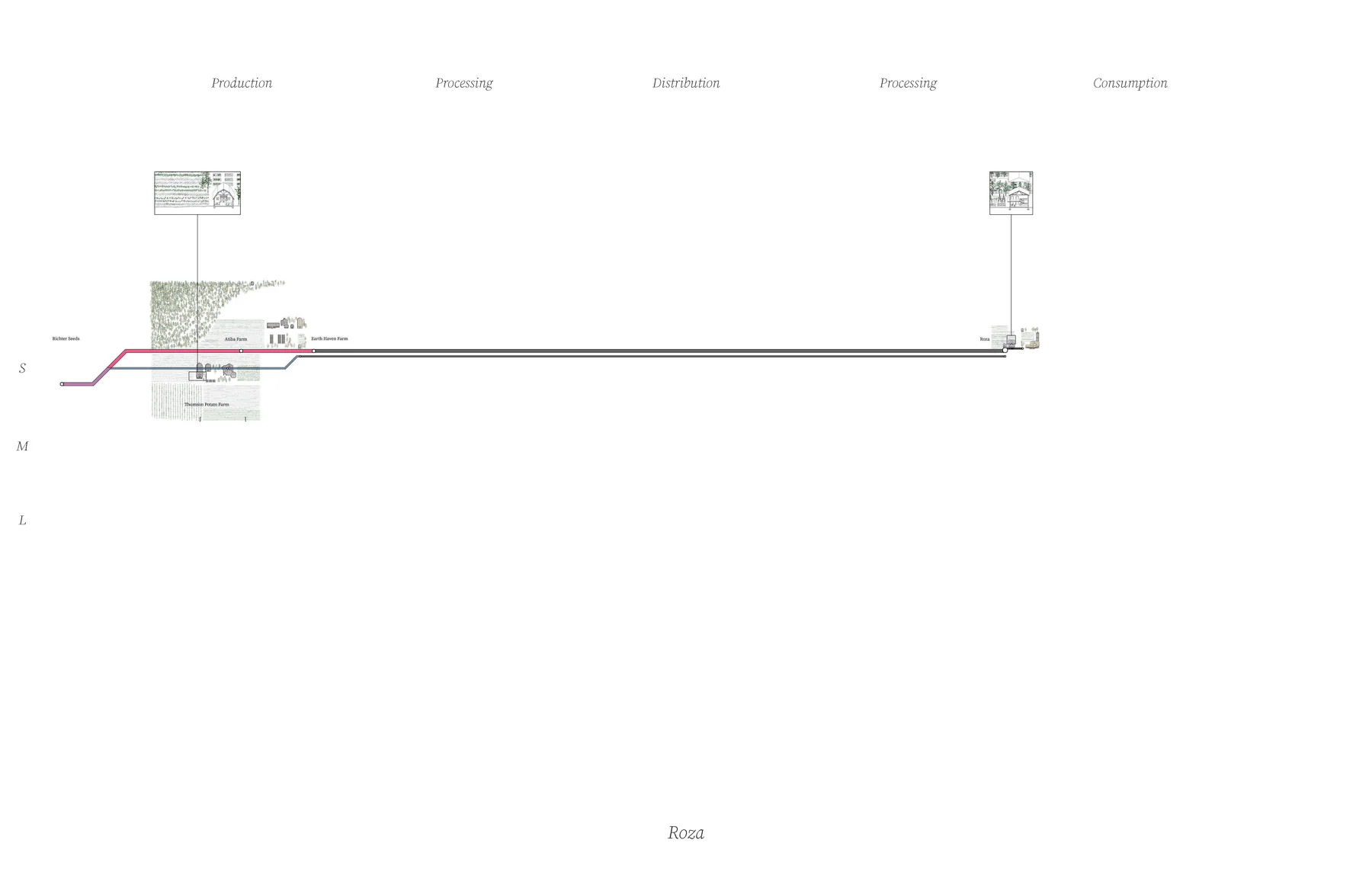
Roza
And last but not least, we have Roza, my dear friend who is an Ayurvedic practitioner. She has created this extremely minimal and sustainable food network for herself and her family that allows them to bypass all the large industrial infrastructures. She relies on her backyard garden and the small-scale farms she visits every weekend to source her food. She also sometimes gets her food by bartering with her neighbor, which I find beautiful. By the way, she has moved to an apartment recently, so she now uses her balcony as a backyard garden.
Time to Intervene
From research to design — four interventions for four people
So at this stage in my thesis, I felt confident enough to intervene. But despite my confidence, I called the city again for advice on how I should intervene; which confused them, but they eventually directed me to
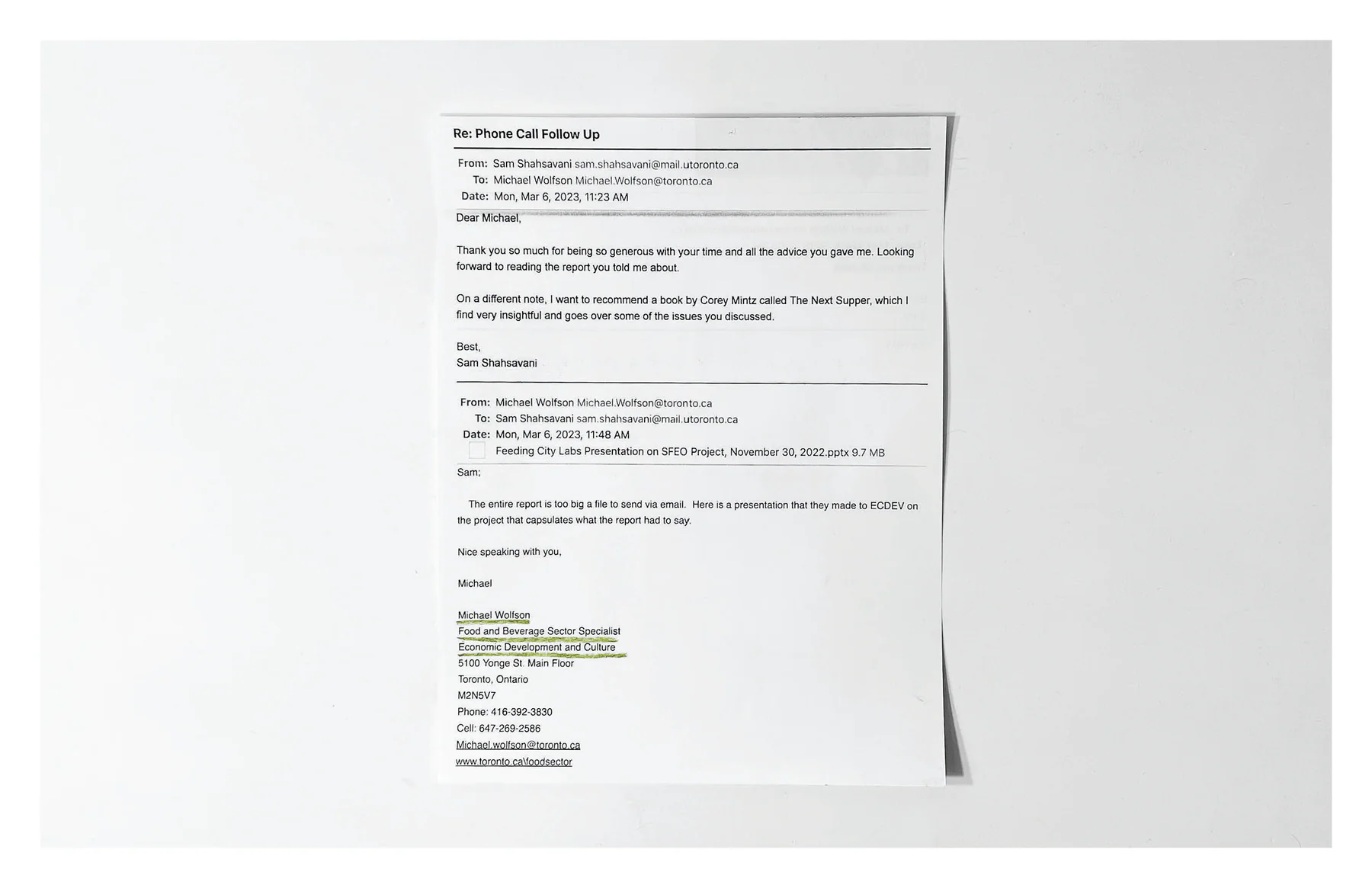
Michael Wolfson, a food and beverage specialist. Lucky for me, and completely by coincidence, he turned out to be the person in charge of the Flip Kitchen program that my friend Branko used to be a part of and Naza is still a part of.
He was very helpful and kind, but during our conversation, I was disappointed by how his view of supporting small food business owners and a helpful intervention was thought about and implemented at a macro administrative level, and he had little empathy for the nuances and stories that the people I interviewed talked about.
As an alternative, I started coming up with a few interventions inspired by the people I interviewed, some polemical and some more practical.
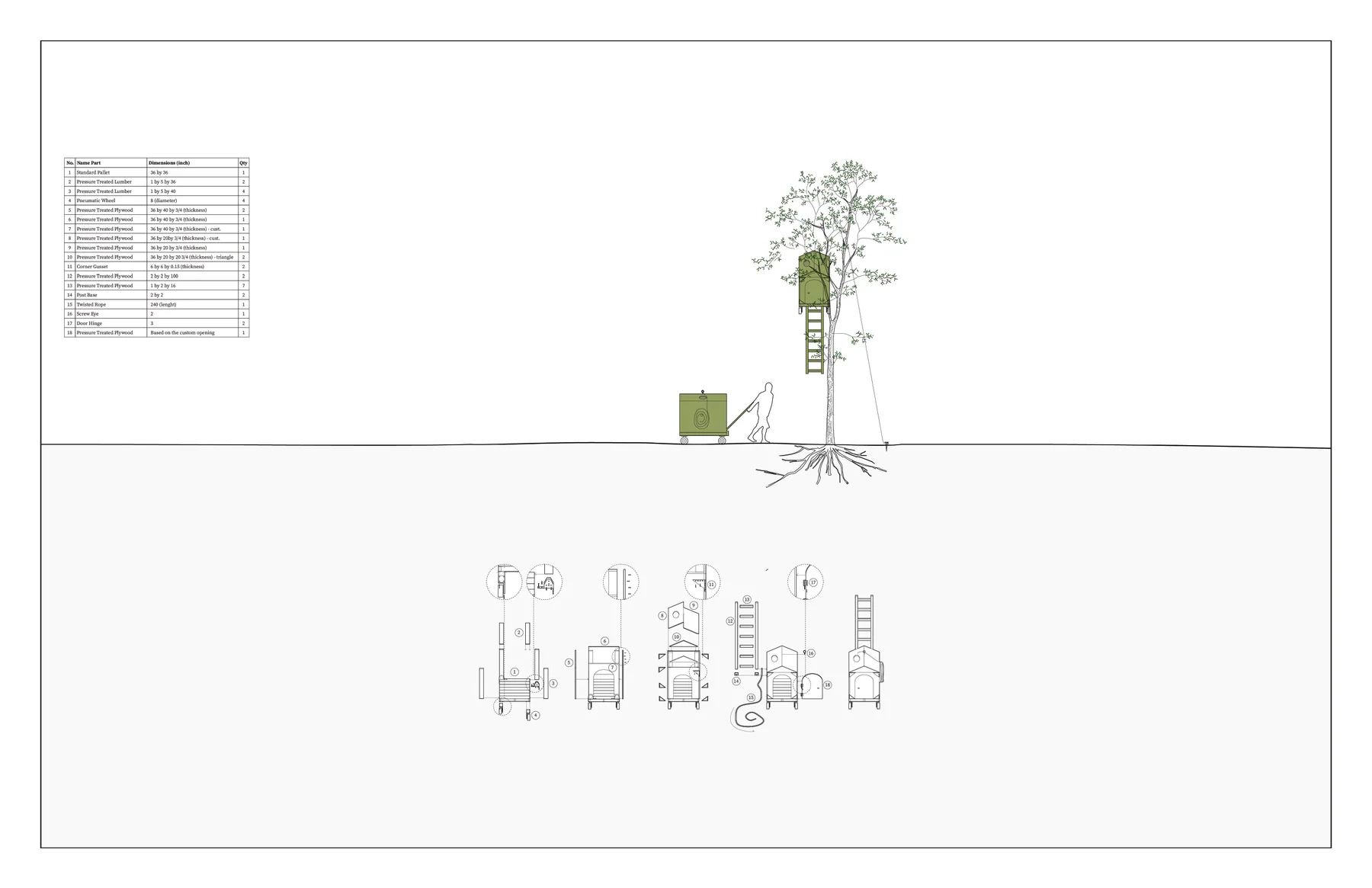
Intervention 1 — For Kwabena
So, for example, Kwabena, who forages tea, talked about how foraging tea is considered illegal, and he is scared of people calling the police on him when he is spending time in nature foraging. So this intervention could both act as a moveable storage unit for the tea he forages and a hiding space in case he's about to get caught.
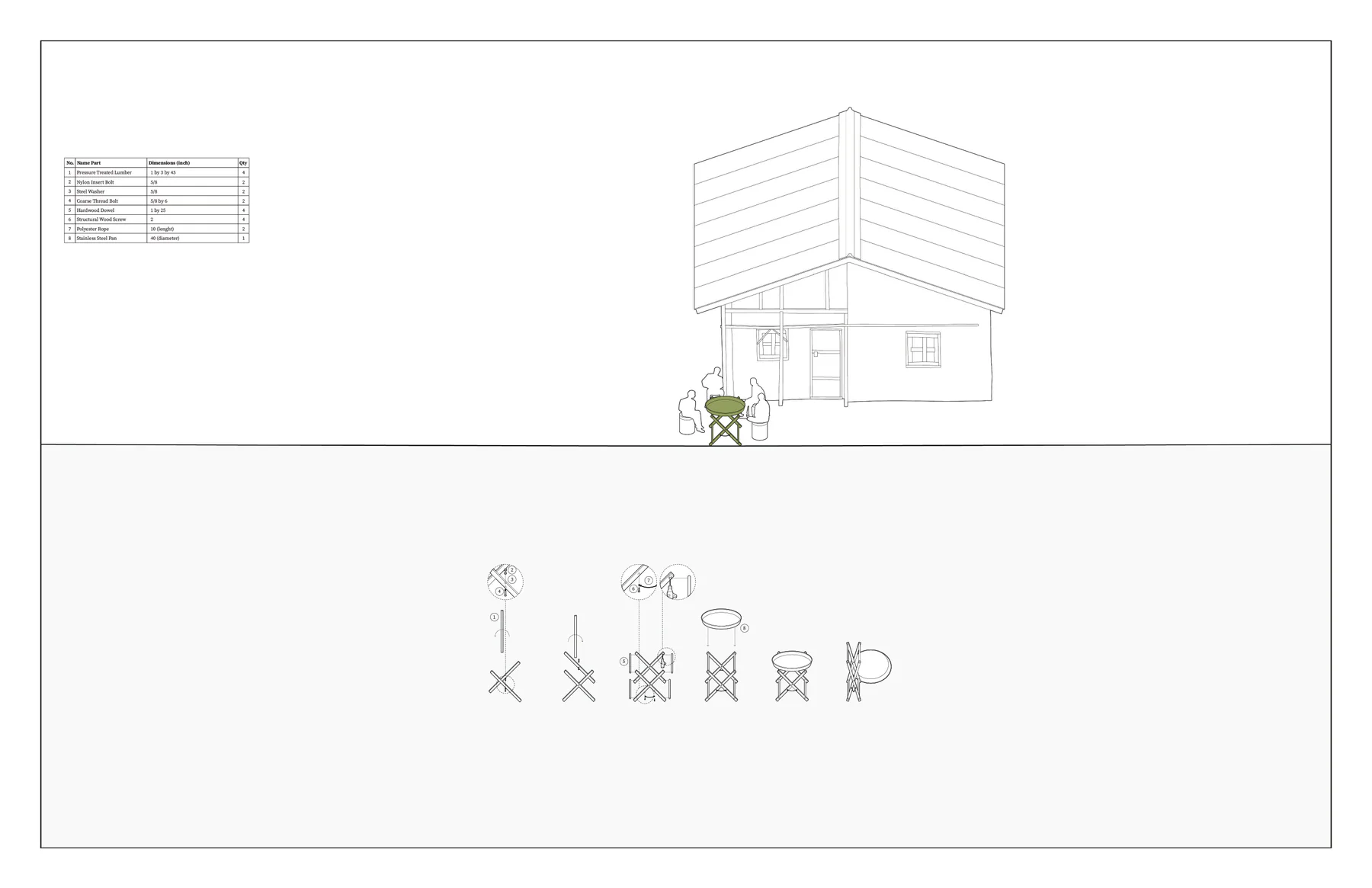
Intervention 2 — For Naza (Cultural)
I was inspired by Naza's story of her childhood and the large circular Eritrean plates that brought the whole family together as they sat around it and ate from it together. So I decided to merge it with a portable table so it could be easily moved around and assembled anywhere they want.
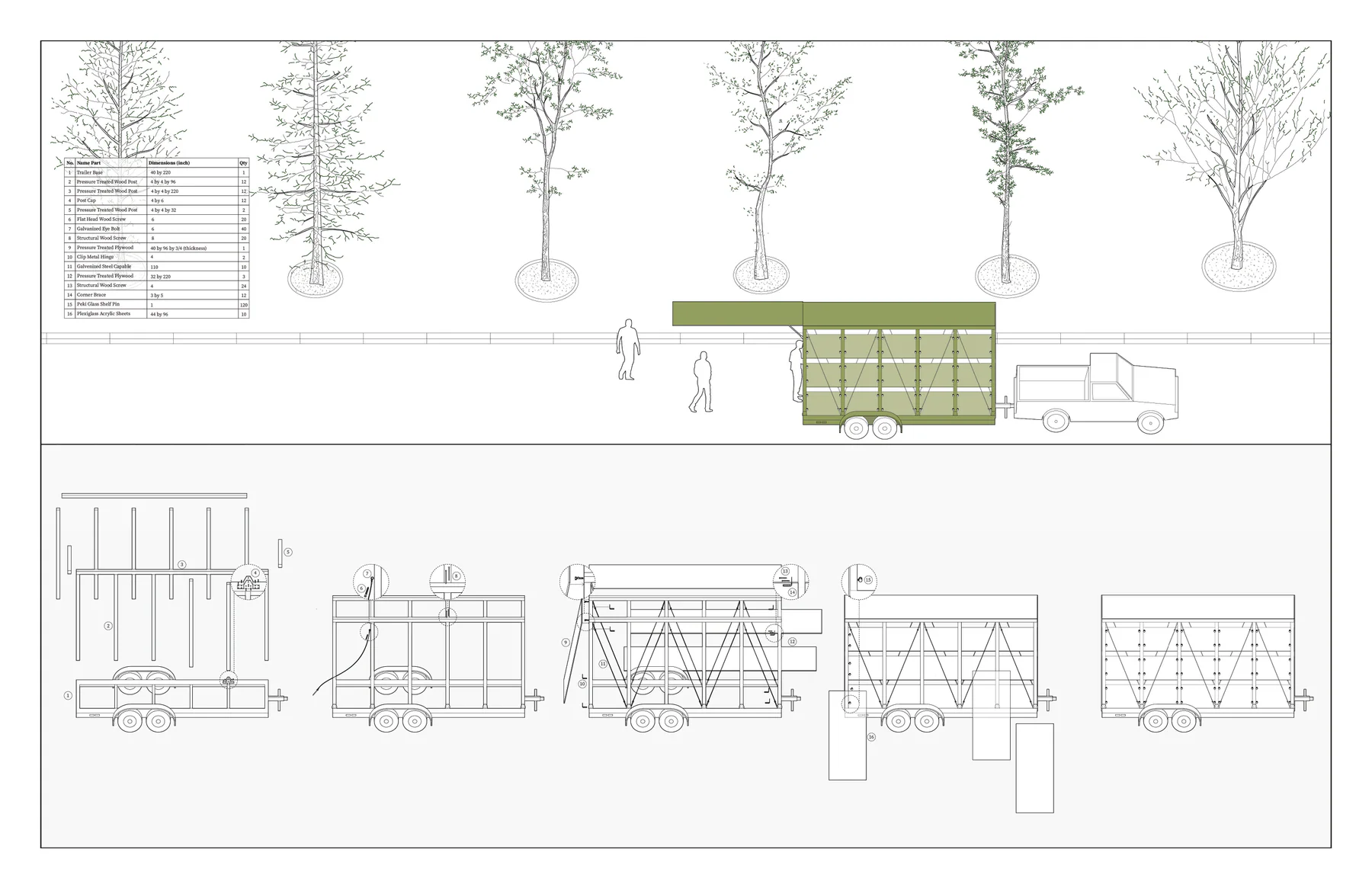
Intervention 3 — For Branko
I was inspired by Branko's complaints about the lack of available storage space at their store. And I was also inspired by the fact that near the time he was closing his store, his shelves were empty, which turned out to be a sign that his business was struggling. So I wanted both a portable food cart slash storage unit that is transparent to show the ins and outs of the food that goes through the cart and, therefore, displays how the vendor is performing.
Intervention 4 — For Naza (The Food Cart)
This is my last intervention which emerged from my experience of volunteering for Naza at the Evergreen Farmer's Market. During that experience, I learned that all the farmer's stands and displays look alike as they have to use the homogeneous flat-pack tables given to them at the farmer's market. I also found moving the food and objects in and out of the terminal tedious and challenging as you have to move plenty of heavy small boxes all the way to your car that is parked at the adjacent parking lot. So I visited Naza, showed her some sketch models, and we put our thoughts together and came up with this prototype that I got a chance to build.
It functions both as a storage area that can be used at the restaurants and the farmers market, as well as a display area for the products.
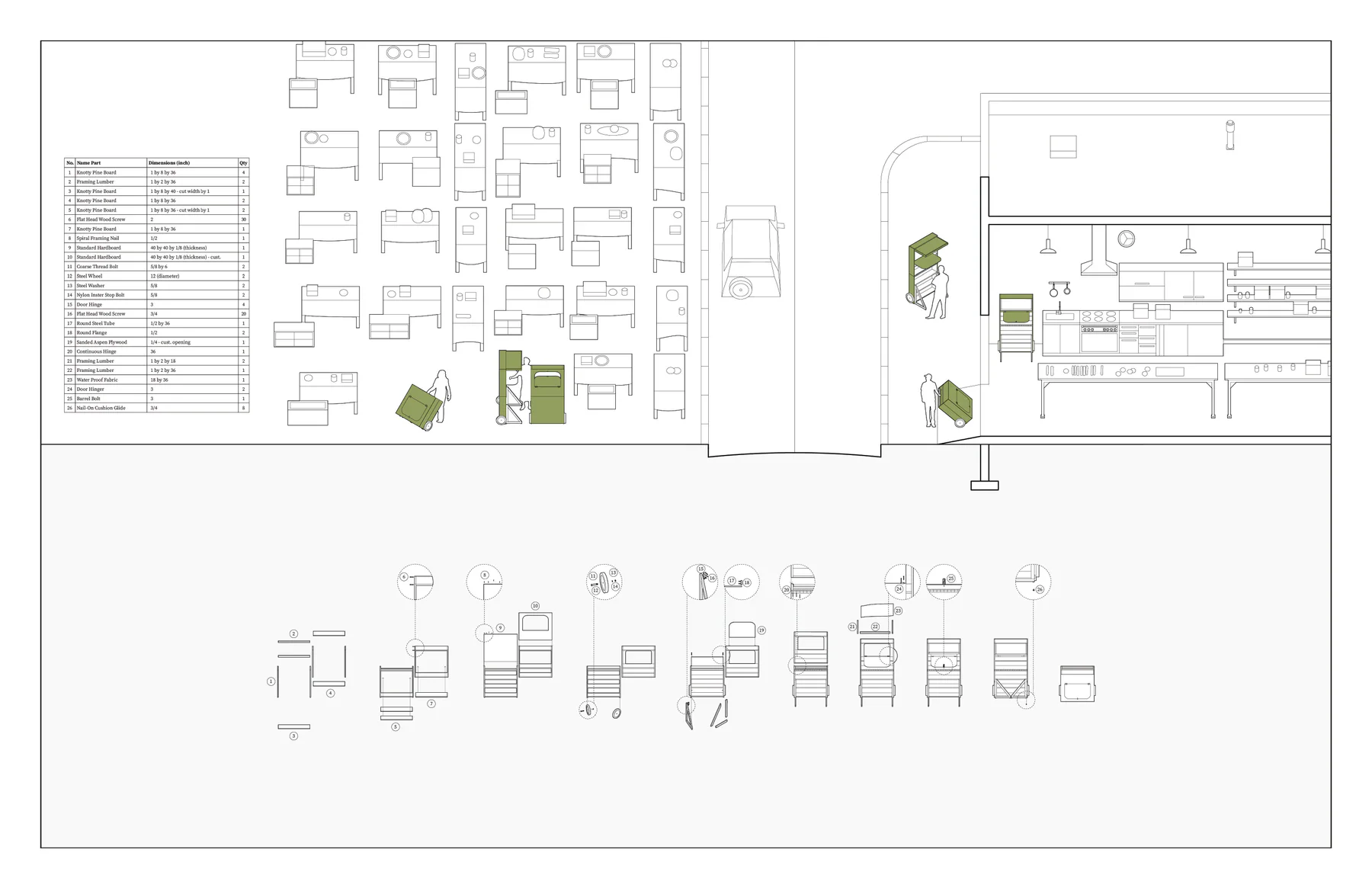
Full technical drawing of the Naza food cart — 26-item parts list, designed collaboratively with Naza
(At this point in the live presentation, Sam left the podium and physically brought in the cart he built. Naza was present in the audience to see it for the first time.)
Live Demonstration
At the thesis presentation, the food cart was physically built and demonstrated live in front of the audience at Café 059, Daniels Faculty.
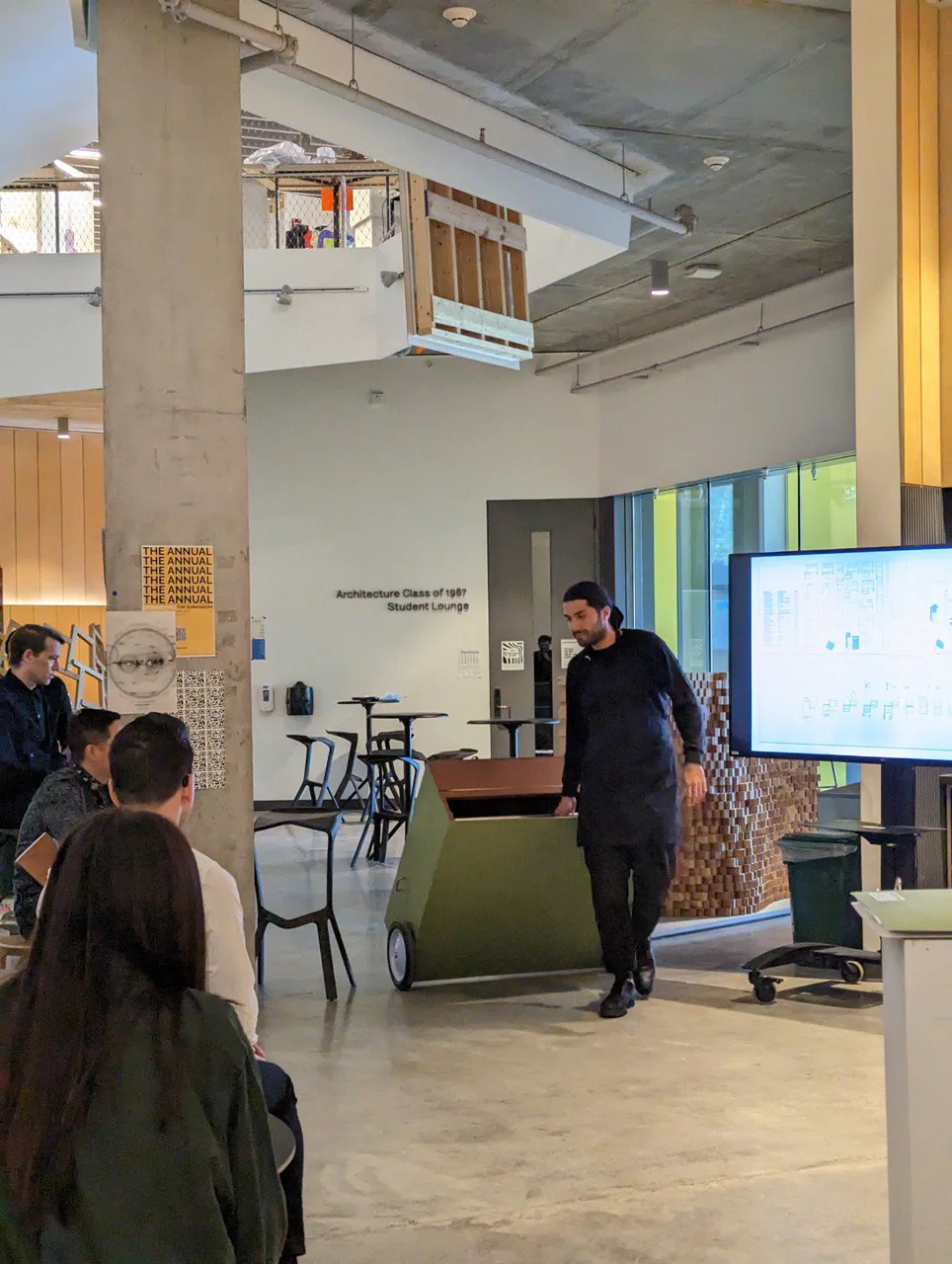
Rolling the green cart in from the side

Sam Shahsavani · Master of Architecture, 2023
John H. Daniels Faculty of Architecture, Landscape, and Design · University of Toronto
Thesis Supervisor: Jeannie Kim
Presentation photos by classmates · Food Terminal footage recorded with hidden camera · Better Food Toronto Inc. is a registered food business